Archivo de la categoría: punk

Jim Jones Revue interview.

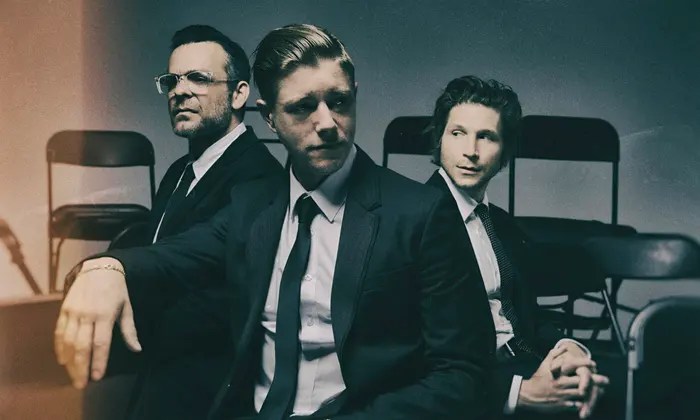
TJJR 1 - (c)Jean Claude Dhien

We have the chance to talk with Jim Jones, the ex leader of Thee Hypnotics who is in Spain to present his latest album, called The Savage Heart. An album that leaves Jim Jones Revue as the british rock band to beat right now. Their shows are a genuine mix of intensity, sweat, chemistry, good feelings and lost years.

ROCKAST talks with Jim Jones about rock, punk, live shows and life itself. And you know when you’re talking to Jim Jones he’s going to have a lot to say.

How is the tour going so far? I’ve seen you get to play 6 or 7 consecutive nights?

 We’re doing good. Cool. We did 5 shows in France, then Barcelona, Valencia, Alicante, Madrid tonight and Bilbao tomorrow and then back to France.

Can you keep your voice after all these nights?

Well you can hear is croaky. You just have to be careful. One of the worst things happens straight after the show, if you go to a noisy room and try to talk with people. I always try to take 5 or 10 minutes after the show to let my voice calm down. Some people thing like oh you think you’re a star you don’t wanna come and talk to us, but it’s a rest, my voice has to sing for everybody tomorrow so I don’t have to cancel the show you know? The most important thing is the show so I spend the rest of the day just trying to get ready for it. The best thing for your voice is sleep. But you’re always on tour, you play late, you get back to the hotel late, then it takes a while to calm down and up in the morning you have to drive for 6 hours sometimes.

Burning Your House Down was very well received, does it actually add more pressure when you made The Savage Heart?

Emm… No, I mean, I think is a good thing. Obviously you think about it but you don’t worry about it. Because if you start worrying worry about it you start changing the way you do things. Is important to make the music that you think is right. You think about what people like, because when you’re playing live you can see what works. But to be creative you have to feel like you’re breaking new grounds someway, all the time. If you try to go backwards that’s a mistake. I’ve never really tried it so I don’t know, maybe is the secret of success (laughs).

In The Savage Heart you’ve worked with 2 Jim Sclavunos (Sonic Youth, Nick Cave & The Bad Seeds drummer) and Jim Abbiss (Arctic Monkeys,Adele, Editors) how was the experience with them? Have they managed to get the best of you?

Yeah I think so, I think we had a really good team. We were trying to get sounds. I think the best way to have an album that sounds different to everyone else is to have a drum sound, an a guitar sound, and a vocal sound that sounds different from everyone else. So that takes a certain kind of person. Jim Sclavunos is very good, he knows the standard procedure but he’s also open minded to try something if he thinks is going to get a better sound. You can ask him to do anything, you can say Jim, we need to murder 5 children to get the right sound for this, and Jim will be like “ok, where do we find the children? I mean, what I’m trying to say is that he’s not usually shocked.
And then for the mixing, I first heard Jim Abbiss through The Heavy single How You Like Me Now?(sings) I thought that it sounded more than punchy but also realistic which you can hear in all their records and I quite liked that. I found out that the producer was Jim Abbiss so we contacted him and we were lucky enough that he was free to do the mixing. We sounded pretty strong already but I think he just pussed that a little bit further with the sound, and it was quite interesting working with him.

«Look, if you came out to see a Jim Jones Revue show, you should take something from it.»

On your shows you get the audience to dance, and have massive fun while you’re playing, and this is something not very usual on gigs nowadays.  A truly Rock and Roll band has to convince everyone in the audience to be considered?

You need to try. I think that people that come to the show is not an spectator, if you come you should get involved. Of course you don’t have to, some people do like to stand in the shadows just watching what’s going on. Look, if you came out to see a Jim Jones Revue show you should take something from it. You should really make it worthwhile. If somebody ask you: What did you do yesterday? You’ll have “well I stood still” or “I disconnected and I had a great time”

Your live shows are full of energy and straight RnR, but Do you feel like you receive from the audience the same energy you’re giving them?

Yeah yeah, if you keep pushing eventually you get a reaction.

Do you think Rock and Roll is getting less popular for real or is just that the media pay enough attention to what bands are doing?

I don’t know, people standards are a little bit different these days. There’s like 3 or 4 generations of people that grown up not having any examples of what it really means to cut through, and do something you know… It’s been a long time since the punk movement, and the real part of that only lasted for a year before it became just a fashion. People were like oh yeah I have green hair and I wear spikes, but punk rock originally was about trying to show to people that you can be an individual, that you can do something different and that you don’t have to follow everybody else’s example or have special skills to do, if you have something to say you can just come out and say it. But pretty soon it just became about green hair and safety pins and you know, ridiculous fucking fashion thing, like nothing to do with what the original movement was about, but I don’t know, I haven’t really seen anything since then that was on that scale to show any of the generations   that they can turn their back on what has been given to them. You know most people accept, ok this is hip/hop, and this is RnB, and this is heavy metal and they just accept it because it is, and they don’t have any examples on how to do something for themselves, they just take what’s been given to them.

«I don’t sing about pink cadillacs, that’s not my life»

Some people think you’re an American band because of your sound. What happened to the Rock in the UK?

Yeah well I really don’t know, I mean we are quite busy so we don’t have much time to look to other stuff that’s going on. But the bands that I listen to are mostly American, and the bands that I take the inspiration from, whether it be The Stooges or Duke Ellington, Sons of the Pioneers…many many musicians. When I was young the British bands that I really like were the ones that sounded American, like the Stones, The Faces, Beatles, The Beatles sound like an American band to me. I play American music, but this music has its connection on Irish, Scottish, Folk music, mixed with African roots music. But I don’t sing about pink cadillacs, as it’s not my life, I sing about my life and what I see around me, and what I feel in my dreams you know? It’s a mistake if you try to follow a fashion, like Rock and Roll as a fashion, because for me that’s not true. I think is a word that describes a music that has an intensity of feeling. And I hear it when I hear to Charlie Mingus or John Coltrane, that’s jazz yes, but it has intensity you know? And for me Rock and Roll means intensity. There’s the term Rock And Roll as used to represent a music that is a mixture of blues and country and bluegrass, I understand that and I like that music

I think the Jim Jones Revue are very careful trying not to stay in a little pigeon hole. We are interested in too many different things to get stuck in just one place.

Do you still have this strong interaction with your fans? Can I do the light?

Yeah I guess so. Yes you can if you want! You have to work though!

What music you’ve been listening lately?

Well we played loud RnR everynight so when I get time I listen to Duke Ellington quite a lot. Also early country music,Sons of the Pioneers, Jimmy Rogers, etc… I listen to that music to relax. It’s quite inspiring as well.

Any plans for next year?

We’re always doing live shows, so we’ll be playing live somewhere. But I think we’re going to try to make an early start whenever we have any free time, we’re going to work on new songs, so when the time comes for the next album we have something ready. Also when we were working on The Savage Heart, towards the end of the writing process, we thought that we have found a new way of working, of creativity. Everybody is keen to see what else comes out.

Are you happy?

Pretty much, yeah. Not bad. (laughs)

The Savage Heart (PIAS) 2012.

DB

«No es buena idea que nos comparen con Black Keys» Entrevista con Two Gallants.

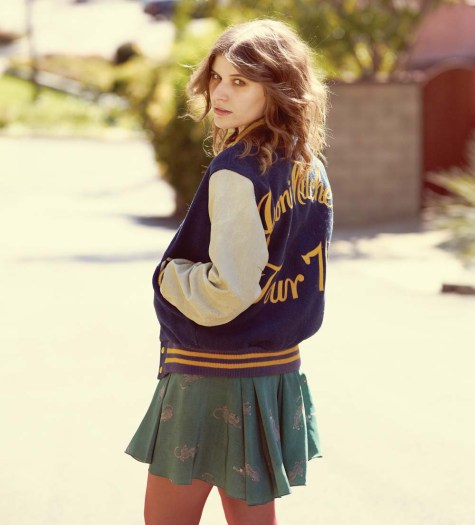
2g_pic2

El dúo de San Francisco vuelve a escena después de 5 años para presentarnos un nuevo álbum llamado The Bloom And The Blight.  En éstos años, ambos  se han embarcado en sus proyectos en solitario, aunque el cantante y guitarrista Adam Stephens también ha tenido que superar el terrible accidente casi mortal que tuvo en la furgoneta de la gira de su anterior grupo.  Llegado el momento y casi recuperado totalmente,  vuelve a la banda en la que lleva tocando más de una decada para presentarnos posiblemente uno de sus mejores trabajos.

Adam y Tyson se conocen desde que tenían 5 años. Empezaron a tocar a la vez e hicieron sus primeros bolos en la calle, en house parties, en cuartos de estar o allá donde les dejaran. Aunque son etiquetados comunmente como una banda de folk, su último álbum destila un blues garajero desgarrador. La voz de Stephens está más afilada que nunca y en The Bloom And The Blight demuestra que nadie en el rock actual chilla como él. Tienen talento de sobra para estar mucho más alto que donde están. Aunque esto sea algo que aparentemente no les quita el sueño.

Los californianos han estado haciendo pleno en sus conciertos en España y han tenido tiempo para sentarse a hablar con nosotros.

Han pasado 5 años desde vuestro último álbum. En este tiempo habéis lanzado cada uno vuestros propios trabajos, ¿Ha influido esto en el nuevo álbum?

TYSON VOGEL: Bueno el estudio no es el sitio más confortable para nosotros, pero creo que grabar discos distintos nos ha permitido a ambos digamos el poder explorar el estudio de una manera diferente. Esto definitivamente inspiró nuestro planteamiento sobre el disco.

En The Bloom And The Blight trabajáis con un gran productor como es John Congleton (Modest Mouse, David Byrne, Explosions In The Sky). ¿Marca la diferencia un gran productor?

ADAM STEPHENS:  Es genial, es un hombre muy inteligente, una experiencia muy reveladora. Ha sido un placer trabajar con él y fue divertido. Creo que el término productor es un término grande, porque tradicionalmente el productor tenía mucho que ver con los arreglos de las canciones, y cómo una canción determinada estaba compuesta, en cierta manera. Pero todo eso básicamente lo hacemos nosotros, él más o menos nos guía. Si teníamos alguna duda sobre algo él nos ayudaba. Si Tyson y yo no nos poníamos de acuerdo en algo el era algo así como la 3ª voz, y nos ayudaba a movernos en la dirección correcta ¿sabes? Pero creo que es mas bien un ingeniero con mucha perspicacia y mucha opinión. Quiero decir… quizás no le debería haber llamado eso.

TV: Asegúrate de que no salga en América. (risas)

Empezásteis en Alive Records, luego Saddle Creek y ahora con la compañía de Dave Matthews, ATO Records. ¿Significa eso que desconfiáis de las grandes compañías?

TV: Absolutamente. Pero la mayoría de nuestros planteamientos digamos que necesitan un ambiente artístico, con gente que innova, que tiene maneras creativas de promocionar la música y la cultura. En realidad Dave Matthews no tiene nada que ver con ATO Records, excepto que lo empezó e invirtió en ello pero básicamente es un socio ¿sabes? ATO lo lleva un grupo de 15 tipos realmente buenos.

AS: Es más un tema de relación personal, queríamos sentirnos en casa en algún sitio y ser amigos de la gente con la que trabajamos. No creo que tuviéramos esa clase de relación en una gran discográfica.

«En la música es bueno tener que pasar apuros.»

¿Cómo el el proceso de elaboración del álbum? ¿Construís los temas juntos?

TV: Sí bueno, creo que el método cambia con cada canción. Nunca es muy consistente realmente.

¿De donde sacáis la inspiración?

TV: Supervivencia.

Habéis tocado mucho en la calle, en fiestas, en bares… ¿Es algo que todo músico debería hacer?

AS: No creo que todo el mundo toque la música apropiada para estos ambientes. En la música es bueno empezar humildemente, tener que pasar muchos apuros y hacer muchos conciertos cutres. Adquieres un sentimiento de gratitud hacia cualquier logro que consigues. Pero esos conciertos fueron los más divertidos. Nunca hacíamos dinero, pero básicamente aprendimos a tocar y a montar un show. El estar tan cerca de la gente, cuando tocas en casa de alguien o en una pequeña habitación, todos sudando, es una experiencia muy impactante, estar tocando o incluso sólo mirando.

¿Lo echáis de menos?

AS: Bueno, lo cierto es que hicimos 3 giras por EEUU como esa, tocando en casas y espacios de arte y realmente en cualquier sitio que podíamos y fue duro ¿sabes? Muchas veces aparecías en una ciudad y no venía nadie a verte, o no había concierto, o el tipo que lo organiza se le olvida, o tocas en un salón con un tío y su hermano y cosas así. Todavía hacemos algo de eso cuando podemos, sobre todo en San Francisco, en casas y tal…

¿Intentáis reflejar las buenas vibraciones de los directos en el álbum?

TV: Intentamos ser lo más honestos que podemos en el disco. Cada álbum que hemos hecho ha sido un intento por capturar el sentimiento de un ambiente de directo. En las actuaciones las cosas cambian, el ambiente etc… así que intentamos encontrar esa pequeña área de control. El directo es probablemente la mejor manera de convencer a la gente.

«El directo es probablemente la mejor manera de convencer a la gente.»

¿Alguna vez habéis pensado añadir algún instrumento o incluso algún miembro a la banda?

AS: Lo hicimos cuando empezamos, pero enseguida fuimos un dúo y según íbamos tocando la gente pensaba que era bueno, así que lo decidimos así. No hacíamos otra cosa que tocar tocar y tocar y nos dimos cuenta de que estaba funcionando así que genial.

¿Parece que Brooklyn y Nashville se llevan la fama como cunas de escenas musicales pero cómo está la cosa en San Francisco?

TV: Es divertido porque SF siempre ha sido un lugar con gente muy artística. Hay muchas bandas haciendo mucha música allí. De hecho, en cierto modo, prefiero que no tenga la reputación de Brooklyn o Nashville, porque así lo hace único. Hay una cantidad ecléctica increíble de música en el corazón de San Francisco. Y así es como fuimos capaces de tocar nuestros primeros conciertos. Aprendimos que nos lo podíamos montar en la calle básicamente en cualquier lugar. Hacíamos conciertos callejeros robando electricidad de la estación de autobús. Éramos 3 bandas tocando 3 canciones cada una y compartíamos los instrumentos. A veces aparecían 150, 200 personas. Es algo que ya no existe pero representa de alguna manera el espíritu de San Francisco.

¿Influye de algún modo el lugar donde naces en vuestro estilo? ¿Sonarías igual si hubierais nacido en algún otro lugar?

AS: Creo que SF realmente nos ha permitido ser músicos y ser excéntricos ¿sabes? Sentirnos cómodos haciendo lo que queríamos hacer. Las condiciones en las que hemos crecido estaban muy ligadas a la creatividad. No era una locura la idea de intentar ser músico. Quiero decir, mis padres no parecían muy contentos al principio, pero  en otros lugares hubiera sido en plan “ah, quieres ser músico, vaya pérdida de tiempo” pero en SF no sé, hay tal sensación de libertad artística y expresiva que tuvo mucho que ver en que lo intentáramos ¿sabes?

«Cuando estás fuera de casa lo único estable es lo inestable»

¿Qué escucháis fuera de Two Gallants?

TV: Escuchamos muchas cosas diferentes, desde el country al hip/hop. Pero ambos, como músicos que somos, digamos que es nuestra obligación escuchar música y aprender lenguajes que provengan de diferentes formas.  Es importante ser abierto e intentar escuchar tanto como podamos. Además creo que nos mantiene sanos! (risas)

Habéis sido comparados en muchas ocasiones con White Stripes o Black Keys, pero ¿Con qué bandas os gustaría que os comparasen? ¿Qué bandas os influyen?

AS: Creo que no es una buena idea. Quiero decir, cuando empezamos a tocar era música de los años 20 y 30 y cosas de ese estilo, música americana, música de raíces sureñas. Tyson es más de cosas contemporáneas pero no sé, hay grandes bandas, My Morning Jacket es una gran banda, Elvis Perkins in Dearland es un disco que nos gusta mucho a ambos. Cass McCombs mola también.

TV: Vamos a tocar algunos shows con Deer Tick al final del año, esa es una banda muy buena.

¿Cuáles son vuestros planes inmediatos para el año próximo?

TV: Bueno, tenemos 4 conciertos en la costa Este, luego 2 semanas libres y luego un tour por la costa Oeste, California, y luego vamos a Australia. Luego creo que volveremos aquí. Confiamos en tocar tanto como podamos.

Última pregunta. ¿Sois felices?

TV: Mmm esa es difícil.

AS: Creo que eso es como una tarea diaria. Hay algunos factores que tienen que ver, como cuando estás fuera de casa y lo único estable es la inestabilidad. Es como si nunca supieras cómo te vas a sentir en tu regreso. Pero una cosa que puedo decir, es que cada vez que subimos al escenario, me siento bien. Eso es lo que hace que el resto del día valga la pena.

DB

Two GallantsThe Bloom And he Blight (PIAS) 2012. Ya a la venta.

Young Guns interview.

Today we have the chance to talk with currently one of the most talked-about bands in the UK. A worthy band that have worked hard to get where they are. They have opened for Bon Jovi at his O2 Residency in London, appeared on the cover of Kerrang! magazine, and played in US, Europe, Asia or Australia, gaining thousands of fans all over the world. Young Guns are in the european leg of the tour right now presenting their acclaimed second album called Bones.

We met the band in a very british day in Madrid and they talked about music, Thailand, social networks or the new album. A very interesting conversation with Gustav, Fraser and Simon.

How is the tour going so far?

SIMON MITCHELL (bass): It’s really really good. We have just started with the European leg, like 4, 5 days ago? Nearly a week. It’s going well and these are the biggest live shows we’ve done, over the year so…

You supported Seether in the US. How was it?

SM: With Seether? Was great, was very different. It’s a different type of crowd, it’s more varied I guess, like, you got the young and you got a lot of older people too. It was a great experience and we’re doing really well.

FRASER TAYLOR (guitar): It was our first American tour and it’s being great.

You had a quick rise. Are you in the exact place you imagined you wanted to be when you started the band?

GUSTAV WORD (frontman): Well, I think it’s difficult because, I remember when we started the band, for me, my main goal was to like, shoot a music video, do a proper tour… and then we did those things and it was like all right man, wouldn’t it be awesome if we had a whole album? And then we did that, but the point I’m trying to make it’s that I think you go pursuing goals and think ok, I’ll be satisfied if we get to do that, but then success changes, and evolve with what you do. But I’m really happy with where we are, I think we’re having an amazing year, easily the best we remember have, as a band. For me, is just about being happy with where you are at that point of time. You know if we say ok I want to play Wembley in two years, if you set goals like that you’ll certainly disappoint yourself, so we’re just trying to enjoy where we are.

You played Shepherd’s Bush recently. Some bands consider it a turning point. Then immediately they want to make Earl’s Court, Wembley, etc…

FT: Well, I mean, obviously that would be very nice, but you now, you’re always like, I want to go further, I want to go to Japan, Australia… and we’ve been lucky enough to do that, now we’re just back here again. I don’t think we really set up ourselves goals in terms of how big we want to be. Do we?

SM: We’re still progressing, and it’s exciting when we go to new places but I think it’s important to kind of like, retain and make sure you don’t lose connection with the places that you do best in.

Bones has been recorded in Thailand, how come that far? How was the experience?

GW: Well we knew we wanted to record it somewhere new. Because we felt like we weren’t starting again as a band, but we were definitely trying to push ourselves to be a better band than we were at that point of time. We though it was quite important to do something new and put ourselves in an environment we hadn’t been until that point. Up until Bones, we had written every song we ever had in exactly the same room, and we recorded everything that we released, in the same studio with the same guy. So I think there was definitely a feeling with us that we wanted to do something new and try to push ourselves to be a better band. When the chance came up to go to Thailand, it was the best way, just to remove ourselves from everything we were familiar with, and go to the other side of the planet. And hopefully that would inspire us as it did.

How do you approach the songs? How is the writing process in YG?

FT: A lot of the time we try to sit in a room all of us and try to write something… but it takes a long time

GW: It’s being painful.

Do you like to improvise in the studio or you got some ideas before getting together to play?

FT: Yeah we do that, but we probably do that for a couple of ours and then just decide that we don’t like anything that we’ve just played so… We normally start of someone bringing a briefing or a melody or something like that, and then we all work on it together.

Probably you got this question asked many times, but what are your main influences?

GW: I always find this question very hard to answer. I think a couple of years ago we were all very heavily influenced. But now I actually don’t know. I mean, I’m happy about this but we don’t really listen to, or we don’t say I want a song that sounds like that, or that band. We just try to keep it organic and hope that whatever we’re doing the 5 of us it sounds as something we want to hear. We don’t ape to anyone else or sound like similar to somebody else. We listen to pop music, metal…

Is there something in particular that you don’t like? X-Factor for instance?

GW: Yeah I really dislike it, but I know some of the guys in the band enjoy it. You know, we all like different things and that’s probably the main thing that defines as a band, in terms of how we sound, it’s the fact that we all do like different things and bring different things to the table.

How do you get on with the critics?
FT: Critics? Well, we’ve been pretty lucky really, we found very few bad write-ups really.

SM: I think is because we’re not trying to be the next punk band or metal band. I guess it’s hard for critics to be kind of like oh they don’t sound like this or like that, you know what I mean? We just write music that we love and that we feel is honest to ourselves and that we enjoy the five of us.

GW: Definitely is like whenever you find a bad review it gets you, but I think we’ve been very lucky overall. I think it’s very subjective, when one person think it’s amazing and someone else is gonna think it’s shit. No matter what anyone says, if it’s negative about you, it will always be that person’s opinion. But you can have thousand nice comments and just one bad and you go straight to the bad one. But there’s a thousand on one side so… You just have to pay no attention.

What music do you do you listen?

GW: I’m listening to the new Muse record a lot. They played in Paris and we missed them for one day. They’re amazing. I’m also listening to the last Gaslight Anthem album.

FT: I’m listening to the Mumford & Sons record and the Ellie Goulding one.

SM: I’m also listening to the new Muse record, and the latest from Kanye West

So basically there’s democracy when choosing the music on the tour bus.

SM: Yeah but we always end up playing the Xbox so… (laughs)

Do you like to get involve in extra musical facts like promotion, marketing or video making?

GW: Well we’re very actively involved with everything, from art work, or designs, to photo shoots ideas or videos… We’re always involved in every single thing. Obviously there are things we don’t have any idea about, like the business side of things.

What percentage of passion do you think there is in your work?

GW: I like to think that our music sounds real and honest. And that’s something the people has always said to us. You know, we are a rock band but there’s a little bit of heart and soul, it’s not like disposable rock club music. We really do care about what we do and we think a lot about every small thing, and I like to believe that that comes across.

SM: We hear a lot of comments of people saying that a lot of people connect with the lyrics of the songs, which is very cool, isn’t it?

FT: I think in a lot of rock music, things like the emotion behind is often not paid enough attention too. You know a lot of time is just about the feeling of rock music, the energy… and that’s cool. I like it, but I like that people connect to our music on a different way. People get really wrapped up and care about it, which is amazing.

Do you think it’s harder now that it was before to make yourself a name in the music industry?

FT: I think it’s easier to get started, you can have a Myspace account, a Facebook account, and get some recorded for cheaper, quicker, and better than it was before. But at the same time, there are much more bands than ever has been.

GW: It’s definitely harder. It’s really difficult and sad it’s not just about music. But you just kind of, have to keep working harder and do what you do no matter how difficult it is.

FT: I think that’s what separate bands nowadays, the desire and the drive to keep going no matter how. And there’s not as much money as it used to be in the music industry than it used to be. And the music industry it’s in the middle of a massive change, as people can get for free what you were selling before.

Do you think the importance of the internet media and the social networks are more relevant than the typical hard work of the bands?

GW: I think it definitely helps. But it has to be both, unless you’re a phenomenal that blows the internet. But in most cases you have to put the hard work, and then use the social networks to kind of facilitate what you’re doing.

FT: There’s nothing that can substitute a good live band. You could find something amazing online, then you go the show and if they’re crap, you’re not going to follow that band. I do think that with the internet everybody have access to anything, and that’s something there wasn’t before.

What would you do if you were not musicians?

GW: Absolutely nothing. I guess I’d be working on whatever job just to have enough money to pay rent and some stuff. I’m very glad to have the band as it gives me the opportunity of focus on it and not to give a shit about something else.

Any ideas for a new record?

GW: Well, we have some little ideas, some seeds, or little recordings on the phones. But I’m really really exciting about doing a new record, something just in my gut tells me it’s going to be the best thing that we’ve done, and I’m really excited about that. I feel like that 2nd record was a real transition or phase for us in terms of how to be a better band. I think now it’s becoming better, really quickly and with every show I feel we’re getting more confident and we’re going somewhere really great. But somehow we got to find the time to tour and to record the new album.

Last question: Are you happy?

All: Yeah! Yeah definitely we do!

D.B.

Bones has been released by [PIAS] on 2012.