

We have the honour to talk with one of those musicians we especially love in ROCKAST. Because he’s not like the others. He’s not a rock star, but creates more emotion than most of them. German pianist Nils Frahm is one of those few artists extremely inspiring and talented who is always working in different projects and record production. He broke his thumb in an accident, but that didn’t mean he was going to rest as the doctor suggested. He kept going playing piano with just 9 fingers, and made a collection of beautiful peaceful songs, in a record he gave away. To his surprise, this no-record called Screws was inmediately loved by fans and critics. It’s an pleasure for us to talk with an outstanding artist in and out of the stage.
We catch the musician on his way to Brussels to perform at the Ancienne Belgique.
«Music is the highest art to create feelings.»
Hi Nils, How are you? What project are you involved with at the moment? Or what do you have in mind to do in short term?
Well, lot of things. Lot of things. I’m working on a live album right now, which will hopefully come out this year. I’m also working on collaborations, with the German singer Anne Müller, and I’m also working on my new solo album.
I’ve seen you’ve recently produced Sara Neufeld (Arcade Fire) debut album.
Yeah that was fun. She’s on tour now in Germany and Europe. She’s fantastic.. I’m working in the production of a Swedish songwriter doing her debut on Bella Union, and also, I’m doing the production for Sleeping Dog, a Belgium singer songwriter, and some more. These days I’m finishing the rework of Juno 12’’. I’m also going to US and Canada and some Europe dates now.
You’re working as producer quite often lately. But, in this area, what do you think we are missing in music nowadays? What do you like to try that you don’t see when listening music?
I don’t think there’s so much music missing. I mean, there’s still so much music that I love and I admire. But usually that’s music from the past. I observe myself listening to a lot of old music. Maybe it has something to do with… I don’t know, honesty? Or people who record good sounding records, like recorded in a session, which is always very pleasure to listen to. I feel like this old skills of crafting a record has slowly disappeared because of the digitalization of music production. And people get used to scratch on their work from the computer, editing all the failures now, and edit way too much of the material and in the end things often become kind of plain. To be honest, I focus so much on the past right now. I’m listening to old classical records, jazz records, and all kind of crazy music. For me is important that I feel something really human and quite unique in somebody’s music. I think some of the bedroom recordings made these days are good and some are just not. Music in the past was usually produced in high quality studios done by really great technicians and producers. We should try to keep up the standard of music production and not let it go down. I feel like since I’m aiming for certain kind of perfection, I’m at the right spot to help people catching their vision of what they want to do, and I learn so much about all the recording techniques and I’m happy to help.

I’d like to talk about the noise possibilities. I’ve heard somewhere, that the most beautiful sound is the silence. So that’s why Screws sounds so minimalist?
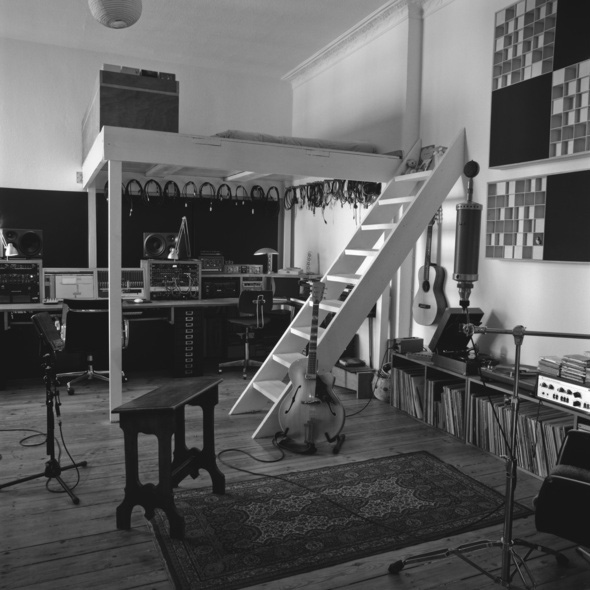
That’s what they said about ECM master chief, “the most beautiful sound next to silence”, is Manfred Eicher music.(laughs). It is kind of a celebration of the silence. And the celebration of the countless and quietness. My expertise is that we try to push the loudness, there are many loud records out there, like Metallica’s, I don’t remember the title of the record. I feel like we’re pushing the possibilities of noise to a degree when all is possible and you can add anything to it. We have such a noisy and aggressive music out there that I feel that the most radical statement you can do is to make something really calm and quiet. Because then people wonder why is so calm, why is so quiet, maybe at least became impressed of people’s hearts and ears is actually dramatically quiet and dramatically calm. But without being just ambient music. I don’t want to see my music as something you only listen to in a background. I also want to tell a story, or read a poem in a music way. I feel like people can focus on the content of music, and the micro-universe of little detail sounds, tiny details and noise sounds, since I take care of all this little sounds like noise and mechanical sounds as a piano, and nothing is totally by accident. I really sculpture these sounds. I feel like there’s still enough musical information, but it’s on the edge. It’s so little, especially on Screws. There are so little efforts, so little noise, so little volume, so little everything, that is almost disappearing of the whole thing. That’s why I was curious about how little can you do and still feel like is music.
Also Screws was supposed to be a gift for your fans, but it has been very well received. Did you expect that?
No, totally not. I felt that it was so little music like I said, that I didn’t want to charge people for it. But when you give somebody, like you go somewhere and pick a tiny flower, and you give it to somebody, people will appreciate the gift, take the little flower and treat it like a gift, they won’t just throw it away. If people would have bought, there certainly would have been people who would have said, “well compared to the last record this is not so good because bla blab bla, it’s so minimalist, I like Felts better because there’s so much going on…” I can already hear the criticism. But it sounds good for me this way. For me it was also a gift to myself because it kept me going in the time I broke my thumb, and I felt like maybe I could never really play piano again. I couldn’t play more because of my broken finger. But it was giving me all my hope and passion for music back. It gave me so much that I already feel like I got everything I wanted from this record, so the only thing I could do was to share this with my friends. It was a very spontaneous idea. I didn’t think of any critics of it because it wasn’t my next release really. I made it everything for free so people can’t really criticize like it’s a new album because… c’mon! I’m just improvising with my fingers but I feel like it’s my favourite record that I’ve ever done. Momentum of quietness and calmness and serenity. But also harmless. I heard something new when I play it, and I probably wouldn’t experience if I didn’t have the accident. So now I know that I can play that way. I’m very grateful. It’s all mono, one microphone, piano, and tape machine. That’s it. It’s so efficient and economical in that sense.
«The more pressure I have, the better my music is.»
I think your music is very visual, as the note that follows the previous note seems like the only one in the world that could go there, pretty much like books, Do you think your music is more open to the listener imagination that pop music?
It might be. It’s visually inspiringly for sure. Lot of people ask me if I’m interesting in making music for films. I’m already doing this. But just without the movie. The movie people see, is what they see in their heads. They’re kind of directing their own movie at the moment they’re listening to my music. I think this is the potential my music has. It creates pictures, is like reading a book. My music is more like reading a book than watching a movie. Is up to the imagination of the listener what they feel, see or sense.
It’s the highest art to inspire certain kind of pictures or feelings. I try to have as much control as possible. I can write a piece and I know that people will think of water. I can write a piece and I know that people will think of love. It’s incredible that you can kind of connect certain images or reactions to the music.
So how is the creative process? Are you very perfectionist or do you prefer to improvise? Do you ever think about the listener when composing music?
I do actually. I wouldn’t do music without people listening. It’s not that I only do this for myself, of course. I love playing music for myself too, but when I work on an album I want it to be something that people love. That doesn’t mean that I want to do it as flat as possible so everybody loves it. I consider that my music will be listened for many people, and I want it to be very good. That gives me a lot of motivation. The more pressure I have, and the more people listening to my music, I feel like, the better my music is. Playing live, for example. I know that the people are there. The concert wouldn’t be the same without the people. They give me certain feedback. They create a certain atmosphere in the room, and it comes back to me onstage. There’s a feedback between the audience and myself. The audience is a very big part of my music, and very big part of my motivation.
«We’re doing something pretty radical and unique»
I read that you like to work pretty late on the day. So the pianist life demands to sacrify somehow, the social life?
Yeah, I definitely sacrify my private life for doing this. In the past I couldn’t have a relation because I’m always on tour. I don’t see my friends and my family very much. I’m alone a lot. Even though I’m with people, I feel quite isolated sometimes. It comes to a point that there’s so much silence around me, and silence in myself that you really can listen to this quite pieces I play. It’s a certain kind of mind-set you have to enter before you can do this. You can’t do this in a noise part of Brooklyn. You just need to find this surrounding which is so quite and calmed that you enter a door where these very quite tunes and quite charm I’m playing, become something loud and powerful I guess. And this is what I expect from my listener too. When I play quite, I feel that people become quite as well, and they stop making noise with their hands and stop moving. After a while I realize that I’ve transformed the room into a different place where these very quite notes can still be heard, because everybody’s ready for it. But you need time for it. For me, to produce this music I need to be alone a lot. To be my myself
We’ve seen your name in lots of modern music pages, or even indie music pages, and you’re playing Primavera Sound next week. Why do you think these modern music pages turn to your music or Olafur?
Because of the feeling that we’re doing something pretty radical and we’re not compromising ourselves. Sounds stupid when I say that, but this is what other artists do. They do what they need to do. I don’t try to do this or that to be loved. I just want to share something really honest, something which confirms me and my vision is that I can change the world, and people’s attitude with my music. I think people see that this quite radical and unique, and musicians don’t try to create some kind of pop phenomenon or whatever. They trust themselves and play classical instruments, and they still attract a young audience, and that keeps me going. And when I’m playing at a festival I’m never fitting in. Primavera is a rock indie festival, and I’m playing piano. And when I play at a jazz festival, I’m not the jazz guy, and the people see it like something different and interesting. Same happens in classical contexts. When people play Mozart and I play my own music. When I play for young people is always odd, but at the end they’re really surprised for what they’ve experienced. And then they go on their blogs and don’t know how to labelled me. I feel very free. I could make an electronic album next. I could also play with a band. I could play piano and synthesizers shows, or classical shows. Even if I decided to be a songwriter.
Have you ever thought of adding voice to your compositions? Have you ever been offered that possibility? What do you think about it?
Yeah I’m also working on some choir ideas right now. Nothing myself, I don’t really like myself singing. But more in a way of, turning voices into sound, and sounds into voices.
«Melancholy is the happy side if being depressed»
Last time I saw you in concert was in Madrid last summer, in a free concert were the sponsor was also giving beer for free. I remember you invited a person from the crowd to play with you, and it was amazing, everyone was blown away. Do you always invite a person from the crowd to improvise with you?
No no no. It’s quite a long time since I don’t do it. Just if I feel comfortable with it. It depends. I can sense what is going on in the room, and if people need something different. It’s not only about playing piano, but make it a wonderful show. In the end is about the whole evening, and what the people think of it. People think it’s kind of brave to do so. Because it could be very horrible. But it’s never horrible. The intention of inviting somebody is wonderful and a loving thing. People might not really listen to the wrong notes we’re hitting. They just hear it with an open heart, because they think it’s a wonderful moment, it’s generous and it’s brave. These are all emotions that we as human beings feel and they’re conscious about love and peace, and they will go home and will feel better.
Are you happy?
Often. Often. I’m never scared of the future. No scared of the present or the past. But I’m a very melancholic person too and sometimes I get very frustrated about the world out there. Sometimes I shut everything down and listen to myself. I think melancholic is the happy and artistic side if being depressed. Without the art I wouldn’t be happy. The piano is like medication for me.
David Bernardo


































 R O C K A S T / /
«New bands shouldn’t listen to old bands» OCEAN COLOUR SCENE Interview.
We’ve had the opportunity to interview some very fascinating people here in Rockast, and probably the best part of interviewing somebody whose entire life is made of music, is to look at their eyes and realize they’re really up for the moment and won’t dodge any question. It’s just a little way of having contact with the fans and try to explain themselves from another point of view. Without the help of their music.
And some of those artists have always something to say and must always be heard. Especially the most experienced ones.
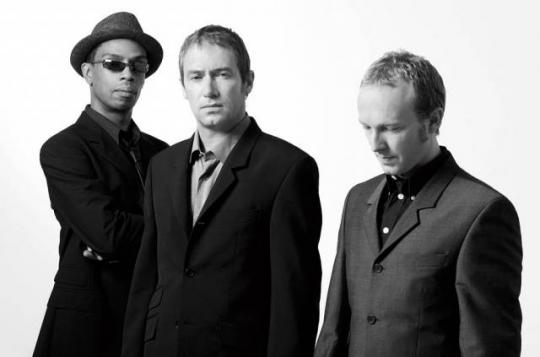
It’s an honour for us having Simon Fowler and Steve Cradock from Ocean Colour Scene here today. They’ve just released their 10th album called ‘Painting’ ([PIAS] 2013), and right in the middle of their Spanish tour, they let us get on their massive tour bus to have a chat about Brit Pop, drugs, record stores, Oasis, Paul Weller, Peace, bands that make shitty music, and even their next record! Definitely not to be missed.
How is the tour going so far?
SIMON FOWLER: It’s going pretty well, thanks. We’ve played 3 gigs so far in Spain. Zaragoza, Santiago and San Sebastián. Very good gigs.
I’ve seen you’ve also played outdoors this morning
STEVE CRADOCK: Yeah at the station, it was just 5 minutes walking from here. That was a bit strange, out of our routine
Painting is your 10th album, it’s been very well received, how do you feel about it? Were you looking forward to make it after your solo albums?
SF: Ahm, I think we really wanted to do it. We wanted to make a new album because we wanted to have new songs to play. And to play live. We spent the year before doing most of the shows up. And we needed something new. I found out that once an album it’s released, you kind of forget about it. We’ve been listening to some things Steve has been working on for the next record, we’ve been listening that the other night.
But you’ve released Paintings less than 2 months ago.
SC: You just don’t sit around and listen to albums really.
SF: I’ve never sat around listened to our own albums once they’ve been made.
SC: I think the reason might be that it’s quite intense when you’re recording it, isn’t it? You hear it so much when you’re recording that…
SF: Is the last thing you want to listen!
SF: You can listen to ZZ Top or Billie Piper’s new cd instead! (Laughs)
Which is the album your most proud of?
SC: I love the B-sides, Seasides and Freerides.
SF: Yeah that’s my favourite album too.
Back on the 90’s, the press was talking about Brit Pop, but now seems like everything is about TV shows and non-sense pop acts. So I guess, after all the Brit Pop scene wasn’t that bad, was it?
SF: It was good fun! Good fun all the time! Wasn’t it? Everyone was young, and everyone was taking lots of drugs. Everyone thought they were in the Beatles or Stones or the Who or the Kings! (laughs). It was a bit like being at school. But I’m not sure that we were Brit pop, I guess to you we are…
SC: Are we?
SF: I guess we were, but we didn’t feel.
But you’re always tagged as Brit pop, maybe just because you were there at that time.
SF: Yeah it was just because we were there. But we were taking us as far too seriously so that we were never a pop band. And I don’t think we were a pop band really.
SC: I think all that happen in London as well, and we lived in Birmingham. There’s 120 miles distance. And all bands lived in London really.
SF: As soon as Oasis made any money what did they do? They fucked off from Manchester and went to London.
SC: I think that everybody was going out and circulating in the same places that we never were really.
But you played with Paul Weller and Oasis back then, did that suppose a decisive boost for Ocean Colour Scene or is not that important?
SF: It’s probably not as important as people imagine, in terms of how we actually became popular. The two are different. Paul was our guardian I guess, our sponsor, a big brother. Steve started playing with him, and because of that we started going out on those early tours doing the support, going in coaches like this, into hotels and cities across Europe… It seemed that it was real, rather than just a hobby.
And Oasis… (thinks for few seconds), well playing with Oasis probably did nothing for us. It put a name in the cool crowd. But in terms of making us popular it didn’t. When we supported them on the first tour, when they were very popular, quite frankly no-one in the crowd wanted to see us. What really happened is that DJ Chris Evans played our song and made our album reached number 2 and stayed 6 months there. I think if it hadn’t been for Chris, it could have only been number 38 for 2 weeks, or something like that. That was the difference, the difference was radio.
You’ve been together more than 20 years, in these years many bands have come and gone, is there like a secret formula to be in the front line all this time?
SC: I think it’s because we stay friends.
SF: And I think the other thing is that, in reality, having that success in 1996, meant that it was something we could carry on doing and something that we could say that’s how we’re going to live adult lives, you know? And make a living. If it hadn’t happen in ’96, I don’t know what would have happen in reality. I’d like to think that we wouldn’t have split up but… I don’t know what would have happen really. So I guess it’s the fact that we are friends, and also became a real band, a real touring band, very professional.
SC: And also none of us got into heroin. I think that’s probably important.
If you had to start all over again, would you change something?
SF: I would change his jacket! (Pointing Steve’s jacket and laughing hard) Well I would have worked harder. I would have written more songs, I think.
But you used to write 3 songs in an afternoon right?
SF: Yeah that’s right. I used to write so that we had something to do. Me and Steve in particular, when we got into the recording studio near to where we lived. If I hadn’t written a couple of songs that night we wouldn’t have nothing to do the following day. And we should carry on writing more I think. But apart from that, no, because even the things that went wrong were funny. (Laughs) Most of the times we got into horrible trouble, that was funny as well. And still is.
The way to make music has changed a lot since you started, but do you reckon it’s actually easier for musicians this way than it was before?
SC: Yeah definitely. It’s much easier. When we started we recorded in 2’’ tapes, like the way they recorded in the 40’s, 50’s or 60’s. And the last 10 or 15 years, it’s totally changed. I don’t think they make tapes anymore.
SF: Yeah they probably don’t, do they?
SC: It’s all made on the digital age. Even Neil Young records, he records on tapes still, but he left digital computer software running alongside it.
SF: Well I’m useless with technology, I can’t use computers, I never use them, but Steve has learnt to record using a machine like this big, instead of the size of this bus, like they used to be. I think that we could make an album in this room. Which in a way I think… Is it sad?
SC: I think it’s a great idea.
SF: It’s actually funny, it’s like the punk ethos, has come around and no one knew how would fulfill it. There’s a democratization of music, anyone can really start making records, and they don’t need a hundred thousand pounds from a major record label, who are going to tell them how to make it.
Do you think listeners are getting lazy or superficial when listening music with the new options they have now? Seems like no one buys albums anymore.
SF: That’s a bit of a concern, when you’re in band, selling records. I don’t know to be honest, because I’m not of the generation. There’s so much information, within seconds you can listen any record, from any artist, from any era, and whatever type of music it is, that’s got to be good. But if you go to record shops, second hand record shops, you pay a fortune for records, £30 for a record I remember I sold for about a fiver when I was on the door with no money and no drugs. That’s crazy. Some of them are £12, some of them are £27, some of them are 30 quid, they don’t seem to have a…
SC: I think it’s the thickness of the vinyl, it makes the heaviest vinyl they normally are £20 in England I think.
Now that we can consider you music veteran, what would be your advice to the bands trying to make themselves a name out there?
SF: Don’t listen to old bands. Get a lawyer. I’d say. Get somebody who you can trust. I’m sure that a lot of bands have problems here and there with money, but I don’t know really.
SC: Get a lawyer and avoid heroin, I would say.
Birmingham’s got a huge musical background. Do you have any recommendations on new bands that you’re currently listening to?
SC: The Boatyman, but they’re not on the internet. Well, there’s just a song recorded at the Irish Centre. Oh and Peace. Do you know Peace?
Yes indeed, they got lot of press. I think they sound a little bit like The Stone Roses in some songs. (I’m thinking in Waste Of Saint, for instance)
SC: I don’t think they do, I think they sound more Brit Pop, poppy vocals…
If you had the chance to play your music anywhere or anytime in history, which place would it be?
SF: Monterrey festival, I think that’s the best festival I remember. But what about tonight in Madrid?
SC: King’s Road 67, when all went colourful.
What’s happening in music when a quality band like OCS doesn’t get to play Arenas more often?
SF: Well to play arenas, I think it’s just U2, Coldplay and probably Oasis, but they’re kind of all very bland don’t they? I don’t think they’re very intimate.
SC: Maybe you just have to play shit like that to get that big.
Are you happy?
SC: Yeah!
SF: Yeah I’m pretty happy, tonight yeah!
SC: He’s never happy. He’s always moody. He’s a miserable old man.
SF: No I’m not!! (laughing)
Paintings has been released by [PIAS] in 2013.
Comparte esto:
Deja un comentario
Publicado en Blues, british rock, folk, indie, rock
Etiquetado ocean colour scene 2013, ocean colour scene comments, ocean colour scene interview 2013, ocean colour scene new album 2013, ocean colour scene paintings, ocean colour scene paul weller, ocean colour scene vs oasis