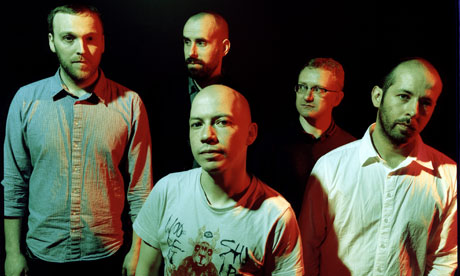
No es una sorpresa que la banda de Faris Badwan siempre haya sentido curiosidad por explorar nuevas ideas en sus discos. Por eso la ruleta de estilos e influencias a la que nos han acostumbrado en cada nuevo álbum no podía faltar en esta ocasión. En el cuarto álbum de la banda, llamado Luminous (XL Recordings, 2014), los sintetizadores y ganchos habituales siguen aún presentes, pero es en el giro a la electrónica donde la banda ha encontrado el nicho a explotar, particularmente visible en temas como “First Day Of Spring” o “In And Out Of Sight”.
El sonido de la banda se expande, dando también lugar a intensas partes instrumentales, como en el tema que abre el disco, “Chasing Shadows”, o el contagioso “I See You”. Sigue habiendo muestras de psicodelia, shoegaze, y música pop, aunque el disco a la larga se hace más difuso, y puede engañar el hecho de no contener un gran éxito que sobresalga, como ocurría en “Skying” o “Primary Colours”.
“Luminous” es un buen disco que bien puede ser el punto de inflexión que marque la carrera de los británicos, postulados como una de las bandas más interesantes del Reino Unido.
Glass Animals son una de las comidillas de este año en lo que nuevas bandas se refiere. Hubo jaleo antes de que sacaran su debut, y lo hay después. La banda de Dave Bayley propone seguir las huellas que dejan bandas como Wild Beasts en Reino Unido y tiran con “Zaba”(Wolf Tone, 2014) por el camino de en medio. Su sonido cálido parece poner a prueba los gustos británicos, y utilizan bases de trip-hop, con texturas electrónicas suaves y rápidamente adictivas. Un nuevo easy-listening para los nuevos tiempos, quizás. La voz de Bayley nunca se levanta en demasía y logra una sensualidad inusual, convirtiéndolo quiera o no, en un álbum ideal para bajar las luces.
Se inspira en el RnB y en formas sinuosas que ya hemos observado en Alt-J o Jungle sin ir más lejos. Apoyándose constantemente en la voz de Bayley y con influencias africanas en las percusiones, trazos de música ambiental y psicodelia plana.
Los primeros singles en darse a conocer, “Pools” y “Gooey”, fueron causa de una cálida acogida por parte de los medios. Pero el disco esconde detalles, voces y pequeños sonidos que se descubren con cada escucha, dejando al descubierto un álbum elegante con una producción muy lograda. Lo publican en Wolf Tone, del productor Paul Epworth, manija de los éxitos de Florence And The Machine o Adele. Entonces, ¿me están vendiendo indie o mainstream? En fin.
«Zaba» es uno de los discos destacados del año, y Glass Animals estarán presentándolo en directo la próxima semana en España de mano de Cooncert, los días 22 y 23 en La [2] de Apolo en Barcelona, y la sala Charada de Madrid respectivamente. Una buena oportunidad de ver uno de los hypes del año en su punto de ebullición.
Teatro del Arte, Madrid Son Estrella Galicia 13/10/2014
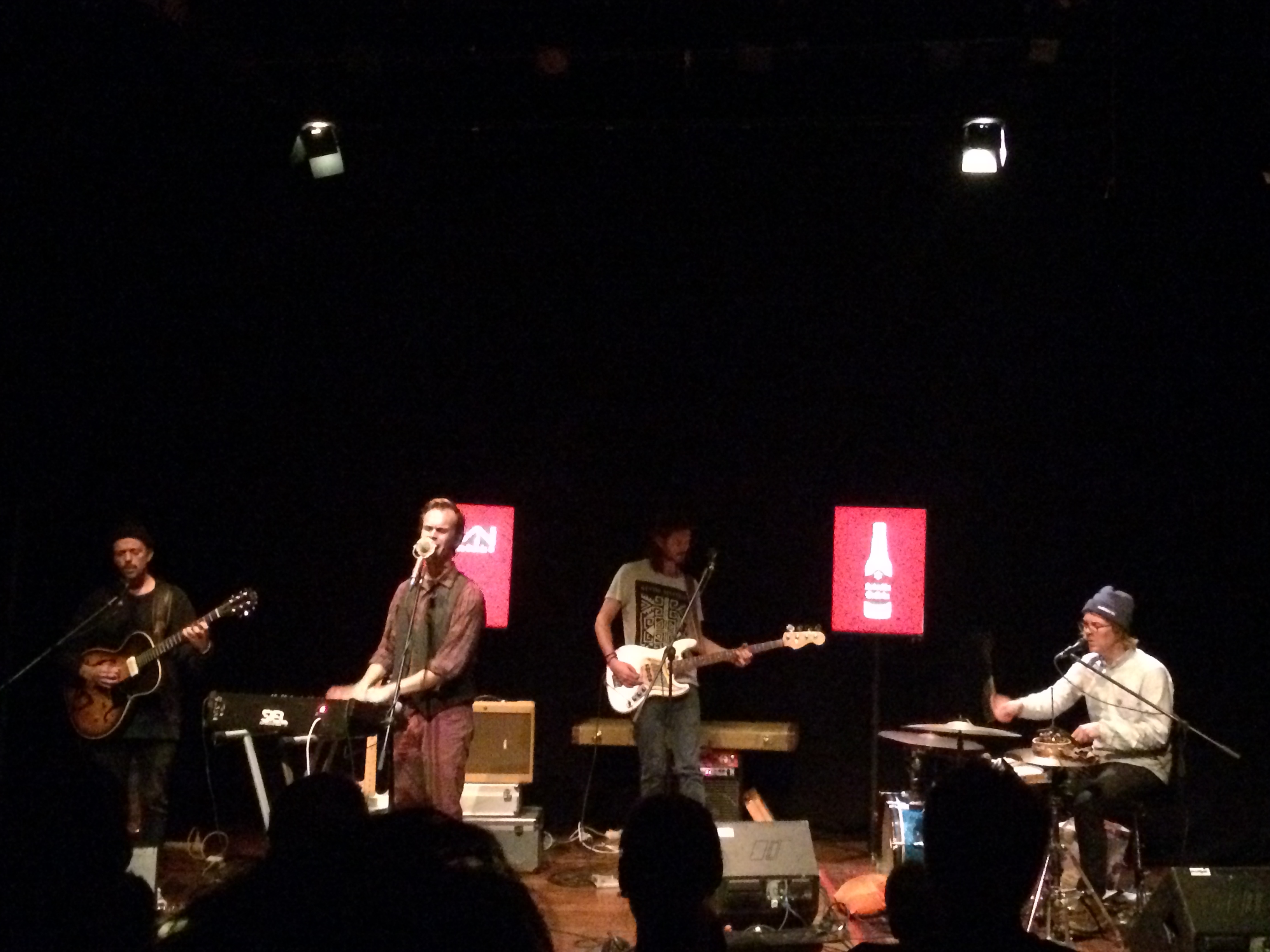
Si es cierto aquello de que la primera impresión es la que cuenta, sin duda la que nos ha dejado esta noche el músico de Portland ha sido ciertamente inmejorable. Peter Broderick es un multi-instrumentista curtido en muchas batallas, que por primera vez se presenta en directo con banda completa en nuestro país. Podría ser un decir cuando él mismo es una banda andante, imitando incluso la trompeta con la boca en alguna ocasión. Pero viene bien acompañado con tres músicos con los que ha grabado su último disco, el EP “(Colours Of The Night) Satellite” (Bella Union, 2014). Especial mención para su percusionista, el cual lleva una colección de artilugios considerable, que le sirve para llevar firme el timón en muchos de los temas. La banda le aporta peso en muchas canciones, especialmente aquellas que empiezan en clave de folk y terminan en jam session de distintos estilos. Un acierto que esperemos sea un proyecto a largo plazo.
La sueca-japonesa Sumie ha sido la encargada de telonear a Broderick, interpretando sus delicados temas, que se bastan con su guitarra acústica y su voz como instrumento adicional. Broderick, que interpreta los dos últimos temas de Sumie, aparece como por arte de magia en el escenario para cantar a capella«Sideline«, mientras anima a los últimos rezagados a tomar sus asientos, antes de sentarse él mismo a finalizar el tema en un piano situado en una esquina de la sala. El Teatro del Arte proporciona una intimidad que le viene como anillo al dedo a la música de Broderick. La sala resulta muy familiar, con un silencio casi sepulcral. Apenas tiene capacidad para unas 100-150 personas, que se disponen alrededor de un funcional escenario situado a ras de suelo.
El concierto deja latente la extremada versatilidad del músico, mezclando géneros que van desde el folk, al funk o el soul, pasando por el jazz, el blues, música hablada, bases de hip-hop, momentos para la psicodelia e incluso algo de post-rock. Si alguien pregunta por innovación que llame por esta puerta. Hay momentos para cantar con el público, como en la interpretación de su ultimo single, “Colours Of The Night”, o dejando a un lado los micrófonos para aprovechar la buena acústica de la sala, como es el caso de “With The Notes In My Ears” o “Below”, con todos los músicos en primera fila en pie haciendo coros a Broderick y su guitarra acústica. Su música tira de raíces americanas clásicas, pero sin apego alguno por mezclar para conseguir un abanico musical realmente único.
Aprovecha para presentar temas de su último EP pero también para deleitarnos con alguna versión personalísima, como el “Get On With Your Life” de Stina Nordenstam, u otra canción de la americana Shelley Short, con Sumie a las voces devolviéndole el favor inicial. El cantante incluso acepta bises y se anima con el primer tema que le lanzan desde la primera fila, “Hello To Nils” incluido en el álbum “How They Are” de 2007.
Quizás Broderick no tenga el reconocimiento que se merece. Y seguramente el boca a oreja pueda ser uno de sus grandes aliados, pero apuesto a que cada persona que tiene oportunidad de verlo no duda en repetir y atraer más fieles. Su interpretación, o performance, que parece que la primera se queda corta, es muy original, es atrevida e innovadora. Su música está muy lejos de ser comercial, con un tímido intento quizá en este último EP, pero lo que transmite con todo su talento, su naturalidad innata y la imagen que deja tras un espectáculo en directo no son muy comunes.
Esperemos que el lleno que ha habido esta noche sirva para poder ver en más ocasiones a un músico excepcional con apego a salirse de las normas convencionales.
La propuesta es definitivamente tentadora para los asiduos a la música en directo. Y la idea es muy clara. La app de Jukely te permite asistir a conciertos ilimitados por solo 25$ al mes, prácticamente el precio de un solo concierto.
La aplicación en cuestión es una plataforma social para encontrar y recomendar conciertos. Se puede escuchar música directamente desde la app, invitar a amigos y compartir y comentar conciertos. Después de conseguir una generosa financiación de 2.4 millones de dólares , proveniente de inversores de Spotify, Pandora o Soundcloud, Jukely lanza ahora Jukely Unlimited. Su nueva variante, permitirá a los suscriptores recibir notificaciones acerca de los conciertos que más se aproximan a sus gustos musicales. Porque Jukely también aprende del usuario a medida que este interactúa con la aplicación.
De este modo la aplicación recomienda al usuario los conciertos disponibles y los amigos que potencialmente puedan estar interesados dentro de su red. Los suscriptores, una vez recibida dicha notificación, pueden confirmar su asistencia en línea (RSVP) a tantos conciertos como deseen, dependiendo siempre de la capacidad del local. Y todo por solo 25 $ al mes. Su co-fundador, Bora Celik, lo explicaba así:
“Creamos Jukely para que resulte más fácil para los aficionados a la música de todo el mundo descubrir y disfrutar de nueva música en directo. No podíamos estar más emocionados con Jukely Unlimited de llevar esto al siguiente nivel, ofreciendo conciertos ilimitados en tu área. Además Jukely Unlimited no puede ser más fácil de usar, ya que hace incluso la planificación por sí mismo”.
De momento solo está disponible en NYC, y cuenta con el respaldo de 17 locales, si bien no se ha especificado aún cuáles son, más ciudades y locales se van a añadir pronto. Actualmente solamente está activo para invitados, pero si vive en NYC, puede inscribirse para solicitar su invitación a través de este link.
De Lydia Loveless. Luego les diremos porqué. Esta americana tenía una historia con el country perfecta. Creció en una granja en Ohio, donde tocaba en sus ratos libres en una banda, en la que estaba acompañada por su padre y sus hermanas. Llega a grabar su primer álbum a las 17 años, donde tira de country clásico y recibe una buena acogida. Pero en el tercer álbum es donde decide cambiar el banjo por la guitarra acústica.
Es posible que sea en este «Somewhere Else», en el que el efímero nivel de fama de la americana se iguale con la alta consideración que le guarda la crítica. Aunque complicado cuando prácticamente no cuenta con promoción alguna.
En esta ocasión se inclina definitivamente al folk-rock de cantautor, con un emotivo disco que ha pulido los fuertes elementos country-rock de sus dos primeros trabajos, si bien algo se podía intuir en el maravilloso EP “Boy Crazy» del año pasado. Las comparaciones e influencias de Neko Case, Lucinda Williams o Patti Smith están ahí, pero con solo 24 años, Lydia Loveless consigue minimizarlas para impregnar su presencia y carisma a lo largo de todo el disco. El timbre de su voz hace que suene convincente tanto en los temas más dramáticos como en los más seguros.
Tiene talento y se ve cómoda en medios tiempos redondos como “Chris Isaac” (+1, en el anterior álbum tenía un tema llamado y dedicado a «Steve Earl») o “Wine Lips”, donde termina literalmente lanzando besos, pero también en las unas enérgicas “To Love Somebody” o “Really Wanna See You Again» que ganan con banda completa
“Somewhere Else” es una inyección de buenrollo que puede acercar el género a nuevas generaciones de oyentes ávidos por escuchar música nueva interesante. Es un disco contundente, que suena sincero, y que devuelve la fe en el mejor folk rock americano de raíces.
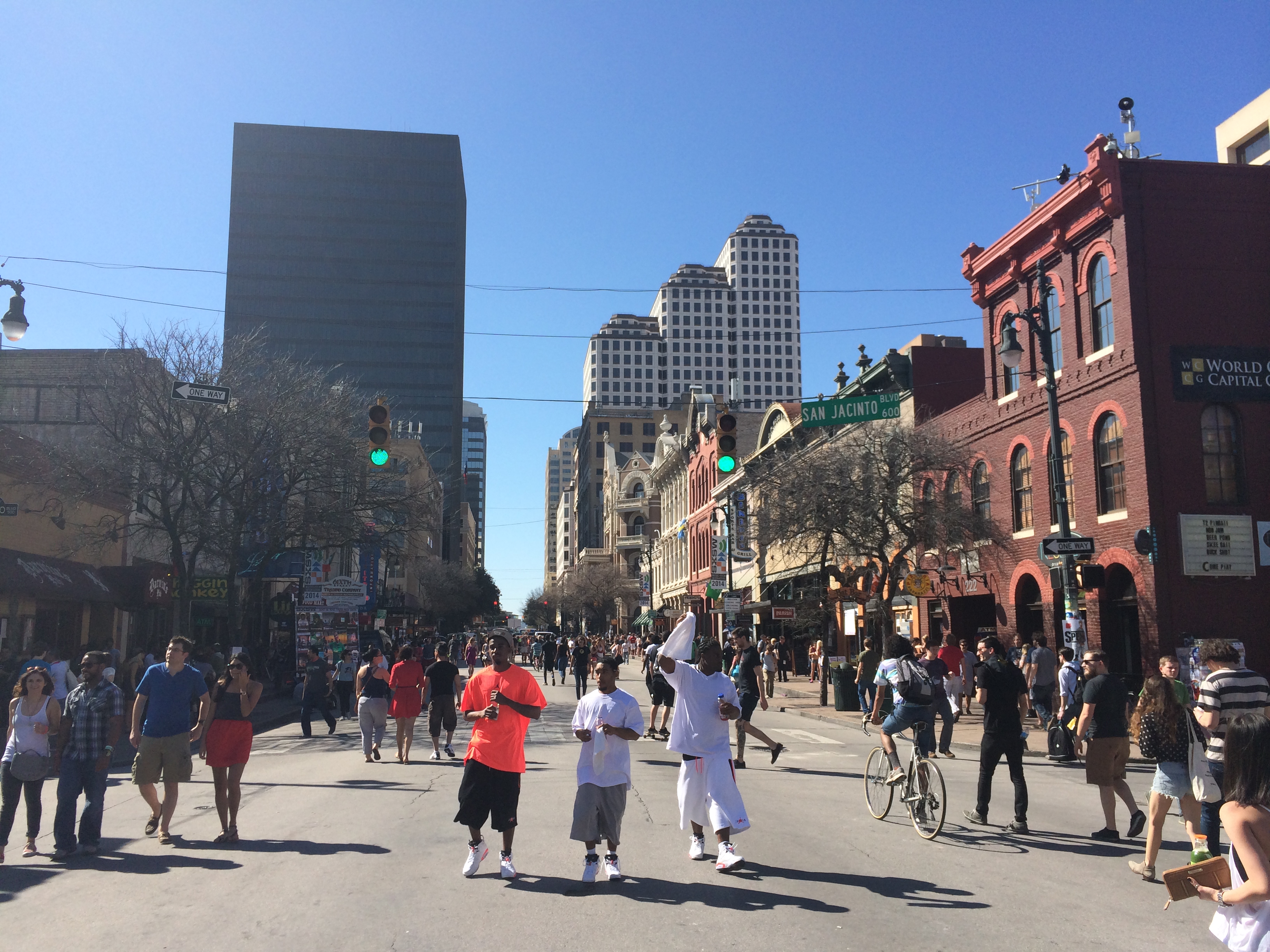
Las alarmas no han tardado en saltar. Tras un reporte de la agencia Populous, que cuenta entre sus clientes con la Fifa, la SuperBowl o el Comité Olímpico Internacional, todos el entorno que rodea el legendario festival hace un análisis de los problemas más llamativos del festival.
El reporte viene a raíz del horrible siniestro del pasado año, cuando un individuo atropelló mortalmente a dos personas y dejó 24 heridos. La organización del festival, que siempre se ha tomado muy en serio el feedback que recibe de artistas, asistentes y lugareños, ha decidido replantearse su modus operandi antes de que sea demasiado tarde. Para ello, ha encargado a una prestigiosa agencia que contemple todas las variables presentes y futuras para la viabilidad del macro evento más importante de Austin.
Esto es lo que sugiere Populous y que está empezando a levantar ampollas:
“Si SXSW no puede mantener el éxito y el crecimiento en el futuro, como cualquier negocio, eventualmente tendrán que tomar decisiones acerca de si pueden o no seguir existiendo en su formato y ubicación actual. Es muy posible que SXSW no tenga otra opción que trasladar los conceptos de oferta su evento a otras ciudades para sostener su modelo de negocio. Esto sería un asunto muy serio para todas las partes teniendo en cuenta el significativo impacto financiero significativo y el retorno que SXSW ofrece a la comunidad, así como la contribución a la marca y el Valor de la Ciudad (PR)”
Aunque los mismos fundadores, de la voz de Roland Swenson han afirmado que no contemplan el traslado de SXSW fuera de Austin, la reflexión en torno al tema cobra mucho sentido.
El plan de seguridad incluye cacheos en las entradas de 6th Street, y otorgar a la organización un mayor control sobre las zonas comunes de la ciudad y los actos no oficiales. También contempla la creación de una denominada “Zona Limpia” que si bien no se ha especificado en que consistiría con exactitud, sería parecido a lo que acontece en eventos como la Super Bowl, quedando bloqueados todos los actos ajenos a la organización de SXSW en un amplio radio de acción. En términos cuantitativos, imaginen la desaparición de los míticos eventos de Hype Hotel, Fader o la práctica totalidad de los eventos de Rainey Street.
El informe, objetivo aparentemente, apuesta por mantener la “equidad de los esponsors”, viendo injusto que algunas marcas paguen cantidades astronómicas por patrocinar grandes eventos, veáse Doritos con Lady Gaga, por ejemplo, mientras otras puedan obtener buenos ingresos patrocinando pequeños eventos en establecimientos de menor capacidad, véase Spotify House, o Dr Martens en el Bar 96 de la mencionada Rainey Street.
La pelota está en el tejado de la propia organización. Empeñada históricamente en hacer un festival lo más organizado posible, escuchando a todas las partes y haciendo crítica constructiva de cada edición, ha llegado el momento en que deben decidir si restringen los eventos no oficiales, con el beneplácito de los mandatarios de la ciudad, o si consideran alejarse a una zona cerrada y acotada al estilo clásico de cualquier festival. En el primer caso, dar portazo a los actos no oficiales supondría mermar drásticamente el espíritu de SXSW. Pero en el segundo caso también, ya que SXSW es la calle, sus gentes, el bullicio y el hecho de que cada rincón de la ciudad tenga una banda tocando a cualquier hora del día y de la noche.
El corporativismo que mece la cuna de SXSW parece estar moviendo sus hilos para no encontrarse con competencia desleal. Por el momento las advertencias y sugerencias vienen en forma de distinguidos reportes, pero ya se ha abierto el debate en Texas y los cambios pueden tener consecuencias ya en la próxima edición.
SXSW se pregunta qué quiere ser viendo en que se ha convertido. Difícil lograr un consenso que deje satisfecho a todas las partes.
La historia dará que hablar.
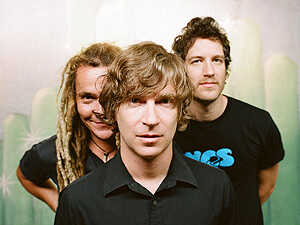
It’s been an intensive journey for Band Of Skulls. Their new album evokes bluesy rock at its best and shows an increasingly distinctive sound. They have released “Himalayan”(Psycollective / [PIAS] 2014) this year and it has received very positive reviews from critic and fans.
Tired of being compared to QOTSA or White Stripes, the new album confirms they’re one of the most interesting bands in the british rock nowadays.
We got the chance to talk to Emma, Russell and Matt at their last visit to Spain during last edition of the DCode festival.
How are you? How is the tour going on?
Emma – Good. Yeah. We had a bit of time off but we’ve been touring from February this year, really.
Because now you’re playing until November I think and then going to Australia?
Russell – Yeah it never stops.
I think Himalaya it’s a pretty loud record. I don’t know if you agree but, Was that your intention after releasing Sweet Sour?
Emma – The loud sound.
Russell – Yeah I guess we compare our work with the other work we’ve done. So yeah we listened to the other records before we went into this new album. I guess we have to try to better ourselves, you know. I think this record’s quite a good combination of all the elements of the band. It almost sits in the middle of the other two records.
Your live performances are very powerful, were you trying to reflect that energy in the album?
Russell – Yeah, to a certain amount, but it is difficult. Making records is a different thing completely to playing a gig. But we try and keep the records not too, what’s the word? We try to keep them free. So when we record we might try and take a whole take and we don’t use any click tracks or anything if we can help it. We recorded all of the backing tracks together, which was a first for us really.
Are you still all involved in the writing process? Do you think is something important in order to keep a band together?
Russell – It takes a long time but it does produce really great songs I think. It’s the way we work. It just takes a long time for everyone to show their ideas and then we all start working on everything all at once. When we first start making a record there’s hundreds of ideas and we have to then edit them down into probably twelve songs.
Is there something in this album you’re particularly proud of, that for instance, you couldn’t hear in previous albums?
Russell – Particularly proud? No.
What makes this album special?
Emma – I think every record is special. We worked with Nick Launay for the first time. He produced this album. He mixed Sweet Sour so that’s how we got to know him. But he came in and brought his head and his ideas with it, which was a really great process and we learnt a lot. We were pushed and we pushed ourselves to follow through new ideas.
How’s been working with producer Nick Launay?
Russell – There’s freedom to try new ideas. Also it gave us the feeling that we could work with other people. We started to realise what elements are us and we can recognize what elements other people bring in. We learnt a lot. We understand our band a bit more after this record I think.
Do you kind of, get rid of pressure with the 3rd album?
Russell – Different kind of pressure.
Matt – There’s always pressure but it’s pressure we but on ourselves. Not from an outside kind of point of view. We want to make something we’re 100% proud of. That’s a big pressure in itself. So we were very pleased at the end of the process when we could sit and listen to this record and be 100% proud.
Russell – And having three records now has almost taken the pressure off. At our gigs, we’ve got enough songs now to make our show how we’ve always wanted it to be I think. But then you’ve got this responsibility of all this other music. It gets difficult to choose the songs to play.
«Everyone is putting synthesizers on a record because they feel they have to»
I reckon Band Of Skulls is a band that don’t complicate too much when recording an album, but are you tempted to add digital sounds, synthesizers or something like that?
Russell – We have lots of things on are records and we always have done. We just never talk about it so no one ever says, “there’s a synthesizer there.” If you really listen there’s a lot of things that are not quite as they seem. That’s what making records is. It’s not the powerful live thing. It’s making an experience for your headphones. So we’re really open minded in the studio. We use small, subtle sounds that just make the record more interesting. And just under a hundred guitars.
Emma – It’s all for the good of the song. It’s got to benefit the song somehow if we’re going to use a different instrument. There’s got to be a reason for it.
Matt – Yeah. Anyone putting synthesizers on a record because they feel they have to, because everyone else is, that’s a very bad way to approach making records.
In fact, you’re pretty difficult to label or to tag you in a specific style. Is that the secret to survive in the music industry today?
Russell – The secret really is to be yourself and then if someone criticises your music you go, “OK we’re just being ourselves”. You’re not trying to be of a certain style or era or fashion. And then when people do like what you’re doing you can feel 100% proud because it’s your work. That’s probably our secret. We believe in our music because it really is from us. There’s no other thing going on.
The album has been out for only few months, but do you already have an idea of how do you want to sound like in the next album?
Russell – It comes naturally. I think in the next few months we’ll start talking about it. You always learn from making a record and then touring that record. So I think we’ve learnt a bit more about ourselves by playing these songs live. We tried to write quite challenging songs this time. They weren’t easy to play. It might be nice to play some more natural songs. Songs that come a bit more naturally. We’ll have to see though. Who knows?
I want to ask you something. Talking with Liam from The Courteeners, he said that it comes down to one person, in the UK to get on Radio 1. Is it really that hard? Is it something that you worried about or do you consider yourselves more of a word of mouth band?
Russell – We definitely started out as a word of mouth band. But we have also had some moments of being played on the radio. And it’s true, it’s a very small amount of people that can say yes or no to which music goes on the radio. The trick is not to be too disheartened if this particular moment is not yours. You just have to carry on working and it comes around again. You can’t have the same ten songs on the radio all year long. Just go and write another song.
Also, I’d like to ask you about your covers, they look very psychologic.
Emma – They’re kind of abstract. It’s a collaboration usually. We came up with a theme that we wanted from the beginning and that’s fed through all three albums. So the first was a painting of mine, the second was a sculpture we had made by someone else and the third was a computer generated image of the sound waves of Himalayan, the song. So we just tried to keep a theme.
Russell – The covers are much more difficult than the music. Coming up with another idea to beat digital soundscapes is going to be… who knows?
What about the name of the album?
Russell – It was something to aim for. There was a lyric and then a song. And then Emma came in with the title, put it in the pot for consideration like we do with everything. It felt like a good thing to call the record that we hadn’t finished. It gave us something to aim for. You can’t make a record call Himalayan and it be damp. It has to be proud of itself. So that’s when the record got even louder – when it got it’s title. And last quesiton. Are you happy?
Emma – Yeah
Russell – We’re in Spain so if today we weren’t happy it would be bad. So we’re very happy. And why not?
El tercer álbum de Band Of Skulls no debería pillarnos de sorpresa. Los de Southampton continúan en “Himalayan” (Psycollective / [PIAS] 2014) un intenso viaje cargado de rock blusero y ganchos directos evocativos a la época del glam. Sus intensas giras con Queens Of The Stone Age o Muse, parecen haberles servido para encerar un sonido que empieza a ser rápidamente reconocible. Cansados de las comparaciones con White Stripes, QOTSA, o BRMC, vienen a presentar un nuevo disco que arriesga sin escatimar en riffs y les coloca en una cómoda posición entre el mejor rock británico del momento.
Hoy tenemos la oportunidad de hablar con el trío aprovechando su paso por España. Emma Richardson,Russell Marsden y MattHayward nos explican sus impresiones del nuevo álbum, la industria británica y sus secretos en la composición.
¿Qué tal estáis? ¿Cómo está yendo el tour?
Emma: Bien, tuvimos algo de tiempo libre pero realmente hemos estado de gira desde Febrero este año.
Estáis de gira hasta Noviembre y luego Australia ¿Verdad?
Russell: Sí, esto nunca se detiene.
Pienso que Himalaya es un álbum que suena muy potente. No sé si estáis de acuerdo, pero ¿era esa vuestra intención después de lanzar Sweet Sour?
Emma: El sonido tenía que ser fuerte.
Russell: Sí supongo que comparamos nuestro trabajo con los otros álbumes que hemos hecho. Escuchamos los otros discos antes de ponernos con este álbum. Supongo que tenemos que intentar superarnos a nosotros mismos. Creo que este disco es una buena combinación de todos los elementos de la banda. Se encuentra entre los otros dos álbumes.
Vuestros directos son muy potentes, ¿Intentabais recoger esa energía en el álbum?
Russell: Sí, hasta cierto punto, pero es difícil. Hacer discos es algo completamente diferente a los directos. Pero intentamos que los discos no sean… ¿Cómo es la palabra? Intentamos que se mantengan libres. Así que cuando grabamos podemos probar y hacerlo todo en una toma sin metrónomo si lo podemos evitar. Grabamos todas las bases juntos, lo que ha sido algo nuevo para nosotros.
¿Seguís componiendo los tres juntos? ¿Ayuda de alguna manera a mantener la banda unida?
Russell: Lleva mucho tiempo, pero sí que hace que de verdad se produzcan grandes canciones yo creo. Es la manera en que trabajamos. Solo que lleva más tiempo para todos el mostrar las ideas y luego comenzar a trabajarlo todo a la vez. Cuando empezamos a hacer un disco siempre hay cientos de ideas y tenemos que editarlas y dejarlas en 12 canciones probablemente.
¿Hay algo de este álbum de lo que estéis particularmente orgullosos?
Russell: Particularmente orgullosos no…
¿Qué hace especial este álbum?
Emma: Yo creo que cada disco es especial. Hemos trabajado con Nick Launeay por primera vez. Él ha sido quien ha producido el álbum. Había mezclado “Sweet Sour” así que así es como le conocimos. Pero vino y se trajo su cabeza y sus ideas, lo que resultó en un gran proceso del que aprendimos mucho. Nos presionaba y nos presionábamos a nosotros mismos para conseguir nuevas ideas.
¿Cómo ha sido trabajar con Nick Launay?
Russell: Hay libertad para intentar nuevas ideas. También nos dio la confianza de saber que podíamos trabajar con otra gente. Empezamos a darnos cuenta de los elementos que son nuestros y los que ha traído otra gente. Aprendimos mucho. Entendemos nuestra banda un poco más después de este disco.
¿Se sacude uno la presión al tratarse del tercer álbum?
Russell: Es un tipo de presión diferente.
Matt: Siempre hay presión, pero es presión que nosotros mismos nos imponemos. No desde un punto de vista del exterior. Queremos hacer algo de lo que estemos 100% orgullosos. Eso es ya una gran presión en sí mismo. Así que estábamos encantados al final del proceso, cuando nos pudimos sentar a escuchar el disco y estar orgullosos al 100%
Russell: El hecho de tener tres discos ya nos ha quitado casi toda la presión. En los conciertos ahora tenemos suficientes canciones para hacer el espectáculo como siempre hemos querido que fuera. Pero luego tienes toda la responsabilidad para toda esta otra música. Se vuelve difícil qué canciones elegir para tocar.
«Hay muchas cosas que no son lo que parecen»
Creo que Bands Of Skulls es una banda que parece que no tiende a complicarse demasiado a la hora de grabar añadiendo sonidos digitales, capas y sintetizadores.
Russell: Tenemos muchas cosas en nuestros discos y siempre las hemos tenido. Nunca hablamos de ello así que nunca nadie dice “hay un sintetizador ahí”. Si te fijas bien hay muchas cosas que no son lo que parecen. De eso se trata al hacer discos. No solo es el tema de directos potentes. Es el hecho de hacer una experiencia para tus auriculares. Tenemos la mente realmente abierta en el estudio. Utilizamos pequeños sonidos, imperceptibles que consiguen hacer el disco más interesantes. Y unas cien guitarras.
Emma: Todo es por el bien de la canción. Tiene que ser en beneficio de la canción de alguna manera si vamos a usar un instrumento diferente. Tiene que haber una razón para ello.
Matt: Sí, todo el mundo está poniendo sintetizadores en los discos porque sienten que lo tienen que hacer, porque todo el mundo lo hace, y es una mala estrategia para hacer discos.
De hecho, sois bastante complicados para etiquetaros en un estilo. ¿Es ese el secreto para sobrevivir en la música hoy en día?
Russell: El secreto realmente es ser tu mismo y luego si alguien critica tu música puedes decir “Vale, estamos siendo nosotros mismos”. No estás intentado ser de un estilo, de una era o de una moda. Entonces cuando a la gente le gusta lo que haces te puedes sentir orgulloso al cien por cien porque es tu trabajo. Ese es probablemente nuestro secreto. Creemos en nuestra música porque viene de verdad de nosotros. No hay nada más.
“Himalaya” ha salido hace solo unos meses, pero tenéis en mente ya alguna idea de cómo queréis que suene el próximo álbum?
Russell: Surge de forma natural. Creo que en los próximos meses empezaremos a hablar sobre ello. Siempre aprendes de hacer un disco y salir de gira con ese disco. Así que creo que hemos aprendido un poco más sobre nosotros al tocar esas canciones en directo. Hemos intentado escribir canciones más exigentes esta vez. No eran fáciles de tocar. Puede ser bonito tocar canciones más naturales esta vez. Canciones que surjan manera más natural. Tenemos que ver eso, ¿quién sabe?
Quería preguntaros algo. Hablando con Liam Fray de los Courteeners, me comentaba que en Reino depende de una sola persona salir en BBC Radio 1. ¿Es realmente tan duro? ¿Es algo que os preocupe u os consideráis una banda de boca a boca?
Russell: Definitivamente empezamos como una banda de boca a boca. Pero hemos tenido algunos momentos en los que nos han puesto en la radio. Y es verdad, hay una cantidad muy pequeña de personas que pueden decir sí o no a qué música sale en la radio. El tueco está en no desanimarte si este momento en particular no es el tuyo. Solo tienes que seguir trabajando y volverá de nuevo. No puedes tener las mismas diez canciones sonando en la radio todo el año. Tienes que ir y escribir otra canción.
¿Qué hay de las portadas? Parecen muy psicológicas.
Emma: Son algo abstractas. Normalmente son una colaboración. Salió un tema que queríamos desde el principio y es lo que se ha ido alimentando a lo largo de los tres discos. Así que el primero era un cuadro mío, el segundo era una escultura que nos hicieron, y el tercero es una imagen generada por ordenador de las curvas de sonido de “Himalayan”, la canción. Intentamos mantener una temática.
Russell: Las portadas son mucho más difíciles que la música. Conseguir otra idea que supere los paisajes digitales a va a ser… ¿Quién sabe?
¿Y el nombre del álbum?
Russell: Era algo que teníamos como objetivo. Había una letra y luego una canción. Y luego Ema sugirió el título y lo puso sobre la mesa para considerarlo como hacemos con todo. Nos pareció buena idea llamarlo así a un disco que no habíamos terminado. Nos dio un objetivo que teníamos que conseguir. No puedes hacer un disco llamado Himalaya y que sea una decepción. Tiene que estar orgulloso en sí mismo. Y es ahí cuando el disco se volvió incluso más potente, cuando le pusimos el título.
Última pregunta. ¿Sois felices?
Emma: ¡Claro!
Russell: Estamos en España así que si hoy no somos felices eso sería triste. Somos muy felices, ¿Porqué no serlo?
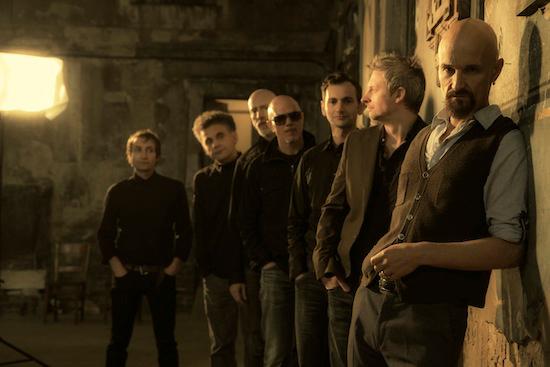
Music can be very cruel at times. It must have happened somewhere, somehow and for a reason which is hard to explain. James stated making music back in 1982, and managed to make themselves a name into the complicated British music scene, alongside names like Smiths, DeaconBlue, SimplyMinds or U2. It’s just incredible to name those who were their openers these years: HappyMondays, StoneRoses, Nirvana, Radiohead, Supergrass, Doves or Coldplay among others, saw their popularity grow after playing for the mancunians. Great musicians who have taken their music across the globe, getting to be widely recognised in every corner of the planet with completely different albums in each country.
James have made music in four different decades, and now more than ever, they consider themselves a family. The media and music industry has been unfair to them, and it still seems like the music owes them something. This year they’ve released “La Petite Mort” (BMG/Cooking Vinyl), six years after their last LP. The subject of the death is floating around the album, but viewed from a different perspective, after the mother and best friend of Tim Booth passed away.
It’s an honor for us to talk to them through Jim Gleenie, co-founder and bassist of James, who speaks about the career of the band, the importance of the success and their brand new album.
In 2008 you were singing “I’m alive” during the song “Bubbles”,and on this new album your focus on death actually. Does it seem like a big change in few years?
Well, I think it probably does, I mean I suppose, you know, the song «Bubbles» was reflecting the birth of Tim’s son and lots of the members of the band have got children. And I’ve got children, you know, so I think we’ve all been through through that very incredibly positive, wonderful, you know amazingly magical experience which is the birth of a child. It’s also, I mean being, you know, the age that we are though as men and musicians, we’ve also experienced someone dying. And I think something like birth is addressed very much, you know, in life. You know, it’s a topic of conversation which is obviously very positive. But something like death, I think particularly in the west and particularly well from our knowledge actually in Britain, death is something which isn’t discussed. It’s something which happens but then we talk about it like it doesn’t exist for the rest of the time. And I think this record, well reflects to some degree I think the bands personal experience of losing your mother and a close friend last year, which I think impacted on the lyrics. But I think also, just our desire to somehow kind of shed some light on the subject and not in a negative way, not in a sad, depressing way but quite a joyous uplifting way. But you’re right, the contradiction, I’d never really thought of it like that I suppose. Yeah, and the contrast between that and “Bubbles” and the concept of some of these songs is quite different isn’t it?
«I don’t think we’ve got the recognition we deserved»
Despite of the title of the album and the main subject, I think the album is very positive don’t you think?
Yes, I do, I do indeed. I think musically it’s focused and the emotion on the record is very positive. I think this is kind of what we wanted to get, ‘cause the thing is it’s difficult when you say that this an album dealing with something about death. Because it entails of your songs to be very miserable and I don’t think the record is. But I think also Tim had to use it, death as a metaphor for change as well, you know, it’s not just literally about people dying. And we have made the record very, very low places and very joyous and very celebratory. And even with the album title, «La Petite Mort», you know it means it means the little death bed often means often means an orgasm. You know, it’s body is trying trying to get humor in it. The album’s lead, the stork, you know, that kind of utilizing Day of the Dead in between. Day of the Dead is a huge celebration of you know relatives and family friends that have died. It’s certainly not a depressing and miserable time. And I think that’s kind of what we wanted to reflect on the record, you know that death is something which – like it or not – you know, it happens to us all. And somehow treat it in a more everyday way but on the same hand, you know thinking positive. The last thing we wanted to do was make a miserable record.
Now Tim lives in California, is it harder to keep the band together when it comes to make an album?
Well we all live quite a long way from each other, even the people that still live in Britain, we don’t really live close to each other It’s quite an effort, I mean we have to put, you know, the time in just to make sure that we can write songs and that we can work on songs. We kind of need to be in the same room together because we can’t do it digitally like I did things for each other. So what we tend to do is, we just make sure that we have that time. You know, we could play a festival and take some extra days and well go to the studio and we’ll write some music. We just make sure, you have to make that time, you know? You have to dig a little bit more difficult because we don’t just live down the road from each other. You have to kind of block in, block the time. But it tends to be quite tense, you know it’s like when we get together to do some work like that, you’ll have long days, having a ball what we’re doing. So it tends to be more productive, I think that’s because you know it’s not that easy to get together. Well you’ve just got to, you know, work around those issues, but it’s not been a problem.
«We couldn’t have handle the success of the Smiths»
In La Petite Mort you’ve worked with Max Dingel. How was it? Did he take the best of you?
I think so yeah, with this record I think we were, we knew we’d written a good bunch of songs, we knew knew we were very, very happy with the songwriting. And we wanted a great sounding record and we liked the stuff that Max Dingel has really got, Glasvegas, and Killers and Muse. And he’s made great sounding records. And we met him and we liked him, we liked his attitude, and we went in the studio for three days with him just to see how things worked out, and it worked really well. He kinda brought like a sonic power, I think an energy to what we do. I think we’ve had that live in the past, but maybe not always translated in a record. And Max is, he’s like a mad scientist. He has all the proper equipment that he’s kind of gathered from all corners of the globe and he fills the studio with it. And he’s arranging, kind of really, really focusing in on the sound of his instruments, getting it sounding incredible before you actually play anything. And I think the record reflects that, that we’re really, really, really happy with how it went on from the core. I mean it’s brutal at times, it’s a big record, the songs are quite abrasive. But I think that’s to do – I think that that is some of the energy and the power that we get when we play live. I think he’s captured that on the record.
You started making music before The Smiths, but they got famous very quick. If you James have had the same quick success, could you have handled it? would you have been able to handle it?
Well absolutely not. Isn’t it, it’s funny you’ve asked that question because myself and Tim were talking about this the other day. How The Smiths were instantly ready for success. As soon as you saw the clip, you know, you knew they were going to be massive and they were ready for it. James took a long time to get recognition and we were very fragile as a band in the early years, us as people, and we wouldn’t have survived – absolutely certainly not. And our road has been a long one, it’s been quite a slow, laborious, difficult road at times, but we’ve needed that, and I think that is the reason we’re still here. You know, we’ve had a chance to let our music find out what we want to be. The relationships in the band have changed. We’ve gone through disasters and fixed the disasters and you know we called friends again. And that’s that journey, it’s been quite private, I don’t think it’s been something that’s been out there in the public limelight. And I think that’s because, a lot of the time we kind of keep ourselves to ourselves. We’re not a band that looks for glory or we’re not a band that’s been in a hurry to kind of get that success and God blessed us there. I think you’re dead right, if we’d have had the success that quickly, as quickly as The Smiths did, we’d have burnt out, we’d have had probably two or three years to the max at the end of it.
«We’ve had a chance to let our music find out what we want to be.»
At this point of your career, what would you think is the secret of success? What would be your advice for the young bands trying to make themselves a name out there?
Wow, I think still enjoying what you do, being happy doing what you do. Still looking for challenges in yourself. I think as a band, which we still think that there’s something that we need to achieve, we need to prove something. I don’t know what that is and I don’t know who we’re to prove, you know? Whether we’re trying to prove it to the world or to ourselves, I don’t know. But there’s a hunger still there that we kinda want something, that we need something and I really don’t know what that is. And I think you still have to have that, and you have to get on with each other. Bringing up something in the past which James has suffered from, you know, we’ve had – we’ve made great records, but a lot of the time it’s been quite difficult. It’s been difficult within the industry, it’s been difficult within the relationships within the band. But I think what we’ve learned from the last probably 10 years of being together is that you can actually enjoy it. You can not just have a great job where you’re doing what you love, but you can actually enjoy it at the same time. And I think it took a long time for us to realize that to be honest.
Quite often, being a musician means that you have to show your personality and personal life in the music you make, so you lose some intimacy. Is it something that is implicit in a musician?
I mean is it, your private life becomes public, is that what you’re saying? I think you’re right but I think that obviously when you choose to do the job that we’ve chosen, a large proportion of your life is public and there’s nothing you can do about that, you know? If you look for success then you’re going to get that attention and you can’t switch that off at all, but you want to. You know, you can’t ask people not to be there some of the time and there’d be, you know, other times it sucks you are in the public eye. What you do, what you say any lyrics you write, your attitude, and you’re out there for the world to see. I think it’s especially now with social media, you know, things get spread very, very quickly. So you can say something and bang it’s right across the world. Perhaps that’s just the nature of the world we live in isn’t it? It seems like there’s a loss less privacy. You have people on social media that means less privacy, I’ve noticed that’s quite rife. But I suppose just that, you know, you have the option. James has a public face, you have to try to keep some part of you private and where you have to try to keep some part of that into normality in your life and not let something like James rule everything, you know? I think we’re lucky in some respects, you know we’re not huge mega stars who can’t leave the house, you know? We don’t have that kind of difficulty to deal with. But I suppose it’s, one of the negatives, one of the few negatives of a job which is very, very positive.
Now that you’ve been making music in 4 different decades, could you tell me your point of view about the situation of music nowadays? What’s the best and the worst from these days we’re living?
I love what music is out at the moment. I mean, I listen to a lot of music. The last albums I bought, I suppose were, the new Elbow album, or TheNational… I think there’s some great music out there still. But the industry’s changed a lot, a completely huge change in the time that I’ve been involved in the music business. It’s just how the industry has shifted. Is it better, is it worse? I don’t really know, I think in some respects, it’s both. It’s easier for a band to be getting on without having to deal with the industry, you know? Because you’ve got Facebook, you can get your music out to people very easily. And it comes down to a lot of choice, not just one in the change of music out there. I think we still have got, you know, you’ve still got to look hard to find good music. And I call to the fact that the industry has shifted away to some degree from this record thing. In your mind, there’s more of them to see from live music then, which is absolutely wonderful but that might close because that’s without even a chance to be found. People still come to concerts, people still come to festivals, you know? But for us that is fantastic, but will not always be. We expect it to be this then we have to do the job. So it’s always changing, I mean the industry now doesn’t seem know what it’s going to be or what it wants to be. And in a band you have to reflect that, you have to kind of keep an eye on the changes that are happening around you. And change what you do, then change your plans accordingly.
«The music industry now doesn’t seem to know what it’s going to be or what it wants to be»
If you had to start the band now, would it be harder than in 1982?
I think it probably would. I think the way that we got successful was down the very traditional route. But it seemed quite obvious what we had to do, it was the specific need to do it. But I think there’s a very traditional route there. You go play concerts, you get you know, some articles in the press and you get in contact with a record company, you maybe get signed, you need to clothes, get on the radio. The route to the industry was a lot clearer than I think it is now. I don’t know, I wouldn’t know how to do it now, of what to do. Yeah, I think it is harder, I think I’d be harder for us at least. I wouldn’t quite know how to do it, I wouldn’t know where to start really, the relationship is vague they just go out there and play some music and see what happens. I don’t know, I really don’t know.
At the end o the day, if a final moment had to come, would you think the people, fans, not fans, musicians, the media, have done justice to all what James has given to the music? Do you think you have the recognition you deserve?
This is going to sound terrible, and it’s going to sound really, really ungrateful and I don’t mean it to sound like this. But no I don’t think we’ve got the recognition we deserve. Which sounds ridiculous because I’ve had an amazing life of music and am having an amazing life of music. But no I don’t think we’re big as we deserve to be and I don’t think we’ve had the recognition from the press or the media or the industry that we deserve. You know, again, as I say, I was embarrassed to say that because my life has been a wealth of riches because of music but I have had an amazing life. The whole of my adult life has been doing something that I absolutely love and to passionately dispute that it could have more is confusing. However, for me to say something that’s negative about our position that was ridiculous. Because I am in such a privileged position. Though I’ve had to, the answer is that yes I sort of do feel a bit lacking of recognition.
And last question, are you happy?
Very happy, very, very happy. I’m happy in James, I’m happy in my personal life, I got married a few years ago. I’m very happy. I live in a lovely part of Scotland, and Music quite seems to have gone wonderfully well for us at the moment. It feels like almost a new chapter for James with this record. It feels like some doors have been opened which has been a struggle for us. And we’re loving playing the songs, and as I said before, we’re getting on well, which means we’re obviously enjoying being together.
La música en ocasiones puede ser muy cruel. Debió suceder en algún sitio, de alguna manera y por alguna razón que es difícil de explicar. James empezaron en la música en el lejano año 82, y consiguieron hacerse un hueco en la complicada escena británica, junto a nombres como Smiths, DeaconBlue, SimpleMinds o U2. Solo nombrar a quienes fueron sus teloneros estos años da vertigo: HappyMondays, StoneRoses, Nirvana, Radiohead, Supergrass, Doves o Coldplay entre otros, veían como su popularidad crecía tras abrir para los de Manchester, mientras estos se quedaban a verlas venir. Grandes músicos curados de todo espanto, han conseguido llevar su música por todo el planeta, logrando incluso el mérito de ser abiertamente conocidos en cada rincón del planeta con álbumes completamente diferentes en cada país.
James han hecho música en cuatro décadas distintas y han sabido sobreponerse a las dificultades contra viento y marea. Es precisamente ahora, después de sus más y sus menos, cuando se consideran más que una familia. Destinados a sufrir la indiferencia intermitente de los medios, viven con la espina clavada de saber que la música les debe una. Una banda que nunca contó con la estrella de los Smiths, pero de quienes pronto se ganaron el respeto, consiguiendo que los de Morrissey canten sus canciones y les inviten incluso a tocar con ellos.
Este año han lanzado “La Petite Mort” (BMG/Cooking Vinyl) seis años después de su último LP. El álbum viene envuelto en la temática de la muerte, pero vista desde otra perspectiva. Abarcándola con total naturalidad, después de la muerte de la madre y el mejor amigo de Tim Booth.
Es un honor para Rockast poder hablar con ellos a través de Jim Gleenie, co-fundador y bajista de la banda, que nos explica con toda sinceridad su interesante punto de vista del nuevo álbum, la historia de la banda o las nuevas tecnologías.
¿Qué tal Jim? En 2008 cantabais “I’m alive” en la canción “Bubbles” y en este nuevo álbum os centráis en el tema de la muerte. Parece un gran cambio en en pocos años.
Supongo que sí que lo es. Quiero decir, la canción “Bubbles” reflejaba el nacimiento del hijo de Tim (Booth). Surgió en una época donde muchos de los miembros de la banda tuvieron niños, así que creo que todos hemos pasado por esa experiencia increíblemente mágica, positiva y maravillosa, que es el nacimiento de un niño. Pero al mismo tiempo, con la edad que tenemos, como hombres y como músicos, también hemos experimentado la muerte de alguien. Un nacimiento se plantea sobre todo en vida. Quiero decir, es un tema de conversación que es obviamente muy positivo. Pero algo como la muerte, particularmente en el oeste y por lo que conocemos también en el resto de Gran Bretaña, es algo que no se discute. Es algo que sucede pero luego hablamos de ello como si no existiera el resto del tiempo. Creo que este disco refleja hasta cierto punto, el punto de vista personal de la banda al perder a tu madre y a un íntimo amigo el pasado año, algo que influyó en las letras. Pero también nuestro deseo de alguna manera, de arrojar algo de luz en el tema, pero no de una manera negativa, ni triste, ni deprimente, sino una manera alegre e inspiradora. Pero sí, tienes razón en la contradicción, nunca he pensado en ello de esa manera. El contraste entre este tema y “Bubbles”, y el concepto con algunas de las canciones del álbum es bastante diferente ¿Verdad?
«Como banda, todavía hay algo que tenemos que demostrar. Pero no sabemos qué es, ni a quién se lo tenemos que demostrar.»
A pesar del título y temática del disco, es un álbum bastante positivo.
Sí, sí que lo es de hecho. Pienso que musicalmente está basado en la emoción y eso es algo muy positivo. Creo que es más o menos lo que buscábamos. Es difícil cuando dices que este álbum trata sobre la muerte. Porque eso implica que tus canciones deban ser tristes, y no creo que el disco lo sea. Pero creo que Tim también tenía que utilizar la muerte como una metáfora para el cambio. Es decir, no trata literalmente de gente muriendo. Hemos hecho un disco de perfil bajo, muy gozoso y muy festivo. Incluso el título del álbum, “La Petite Mort”, significa “la pequeña muerte”, que se refiere a un orgasmo. ¿Sabes? El disco intenta sacar el humor que lleva dentro. Pero se guía por el Día de los Muertos. El Día de los Muertos es una gran celebración de familiares y amigos que han fallecido. Y en absoluto es un momento triste o depresivo. Y creo que eso es lo que queríamos reflejar en el disco, el hecho de que la muerte es algo, que te guste o no, nos pasa a todos. Y tratarlo de un modo normal y llevadero, pero al mismo tiempo pensando en positivo. Lo último que queríamos hacer era un disco triste.
Ahora que Tim vive en California, ¿Es más duro mantener la banda unida cuando llega la hora de grabar un álbum?
Bueno, todos vivimos bastante lejos los unos de los otros. Incluso la gente que estamos en Gran Bretaña tampoco vivimos realmente cerca entre nosotros. Supone un gran esfuerzo. Tenemos que organizar bien el tiempo para asegurarnos de que podemos escribir canciones y trabajar en ellas. Pero también por la manera que tenemos de escribir. Tenemos la necesidad de estar todos juntos en el mismo lugar, porque no podemos hacerlo digitalmente, como solíamos hacer en el pasado. Así que tendemos a asegurarnos de que disponemos de tiempo. Podemos tocar en un festival y coger unos cuantos días extra e ir al estudio y escribir nuevos temas. Nos aseguramos de tener ese tiempo. Tienes que organizarte un poco más, y es difícil porque no vivimos uno al lado del otro. Tienes que bloquearte esos días. Y son muy intensos. Cuando nos juntamos para trabajar, son largos días disfrutando al máximo de lo que hacemos. Tienes que arreglártelas con esos inconvenientes pero no ha sido un problema.
«No creo que tengamos el reconocimiento que merecemos»
En “La Petite Mort” trabajais con Max Dingel. ¿Cómo ha sido? ¿Ha sacado lo mejor de vosotros?
Creo que sí. Mientras escribíamos el disco sabíamos que estábamos escribiendo un buen puñado de canciones. Estábamos muy contentos con la composición. Queríamos un disco que sonara grande y nos gustaba mucho lo que había hecho Max Dingel con Glasvegas, los Killers o Muse. Ha hecho grandes discos que suenan muy bien. Nos conocimos y nos gustó. Nos gustó su actitud. Pasamos tres días en el estudio para ver cómo funcionaban las cosas y fue realmente bien. Es como si aportara una especie de poder sónico, más energía a lo que hacemos. Creo que hemos obtenido eso en directo antes, pero quizás nunca lo hemos trasladado a un disco. Y Max es como un científico loco. Tiene todo el equipo adecuado, con el estudio lleno de todo lo que ha ido reuniendo por todos los rincones del mundo. En los arreglos se concentra especialmente en el sonido de los instrumentos, consiguiendo que suene increíble incluso antes de que toques algo. Y creo que el disco refleja que realmente estábamos muy, muy, muy felices con cómo fue desde la base Quiero decir, por momentos es brutal, es un gran disco, las canciones son bastante abrasivas. Pero eso es lo que somos. Creo que eso es algo de la energía y la potencia que conseguimos cuando tocamos en directo. Pienso que Max ha capturado eso en el disco.
Empezasteis a hacer música antes que los Smiths, pero ellos se hicieron famosos muy rápido. Si James hubiera tenido el mismo éxito, con la misma rapidez, ¿Crees que hubierais sabido llevarlo?
En absoluto. Es curioso que me preguntes esto porque el otro día precisamente lo hablábamos Tim y yo. De cómo los Smiths estaban instantáneamente preparados para el éxito. Tan pronto como veíais el videoclip, sabías que iba a ser grandes y que estaban preparados para ello. A James le llevo un largo tiempo conseguir reconocimiento; éramos muy frágiles en los primeros años como banda, y nosotros como personas, no hubiéramos sobrevivido. En absoluto. Con toda certeza. Nuestra carretera ha sido larga. Muy lenta y laboriosa. Difícil por momentos, pero era lo que necesitábamos y creo que esa es la razón por la que estamos aquí todavía. Sabes, hemos tenido la oportunidad de dejar que nuestra música descubriera lo que quería ser. Las relaciones en la banda han cambiado. Hemos pasado por muchos desastres, hemos arreglado esos desastres y hemos vuelto a ser amigos. Y ese es el viaje. Ha sido bastante privado, no creo que sea algo que se haya aireado en el primer plano de los medios. Y creo que es porque la mayor parte del tiempo nos reservamos para nosotros mismos. No somos una banda que busque la gloria, o una banda que haya tenido prisa por conseguir el éxito rápidamente, o al menos tan rápido como lo hicieron los Smiths. Lo hubiéramos quemado. Al final solamente hubiéramos aguantado dos o tres años al máximo.
Llegados a este punto de vuestra carrera, ¿Cuál crees que es el secreto de vuestro éxito? ¿Cuál sería vuestro consejo para las bandas jóvenes que intentan hacerse un nombre en la música?
¡Wow! Creo que disfrutar y ser feliz con lo que haces, seguir buscando retos con lo que haces…Creo que como banda hay algo que todavía tenemos que conseguir; necesitamos demostrar algo. No sé lo que es, ni sé a quién se lo tenemos que demostrar. ¿Sabes? No sé si se lo tenemos de demostrar al mundo o a nosotros mismos. No lo sé. Pero hay un deseo todavía dentro, como si quisiéramos algo, como si necesitáramos algo y realmente no sé lo que es. Y no nos arrepentimos del pasado. James ha sufrido en el pasado, hemos tenido grandes discos, pero durante mucho tiempo ha sido bastante difícil. Ha sido difícil con la industria, ha sido difícil con las relaciones en la banda… Pero hemos aprendido probablemente de los últimos 10 años juntos que precisamente estando juntos es cuando puedes de hecho disfrutarlo. Es imposible no tener un buen trabajo si lo que haces es lo que amas, y además puedes disfrutarlo al mismo tiempo. A nosotros nos llevo mucho tiempo darnos cuenta, si te soy honesto.
«Es imposible no tener un buen trabajo si lo que haces es lo que amas.»
Muy a menudo, ser músico significa que tienes que mostrar tu personalidad y vida personal en la música que haces, así que terminas perdiendo intimidad. ¿Es algo implícito en la vida de un músico?
¿Cuándo tu vida privada se transforma en tu vida pública? Sí, creo que tienes razón. Obviamente, al hacer el trabajo que has elegido, hay una gran proporción de tu vida que es pública y no hay nada que puedas hacer. Si buscas tener éxito, vas a atraer toda esa atención y no es algo que puedas sencillamente apagar aunque quieras hacerlo. No puedes pedir a la gente que no esté ahí durante ciertos momentos, pero a veces es desagradable estar en el ojo público. Lo que haces, lo que dices, cualquier letra que escribes, tu actitud, tu opinión… está ahí fuera para que lo vea el mundo. Especialmente ahora que con las redes sociales todo se difunde muy rápidamente. Puedes decir algo y ¡Bam! está por todo el mundo. Quizás esa sea la naturaleza del mundo en el que vivimos ¿verdad? Parece que hay mucha menos privacidad. Cada vez tienes más gente en redes sociales y eso significa menos privacidad. Me he dado cuenta de que esto está bastante extendido. Pero supongo que tienes elección. James tiene una cara pública, y tienes que intentar mantener una parte de ti privada, e intentar mantener esa parte en la normalidad de tu vida diaria, y no dejar que James lo decida todo. ¿Me entiendes? Creo que somos afortunados en algunos aspectos; no somos grandes mega estrellas que no puedan salir de casa. No tenemos que tratar con ese tipo de dificultad. Pero pienso que es una de las pocas cosas negativas de un trabajo que es muy, muy positivo.
Ahora que habéis hecho música en cuatro décadas diferentes, ¿Podrías decirnos vuestro punto de vista sobre la situación de la música hoy en día? ¿Qué es lo mejor y peor de estos días que vivimos?
Me encanta la música que se hace ahora. Quiero decir, escucho mucha música. El último álbum que compré, supongo que fue el nuevo disco de Elbow, o The National. Creo que aún hay mucha buena música ahí fuera. Pero la industria ha cambiado mucho. Un cambio absolutamente enorme en el tiempo que llevo involucrado en el negocio de la música. Sencillamente cómo se ha desplazado. ¿Es mejor o es peor? Realmente no lo sé. Pienso en ambos casos y creo en los dos; es más fácil para una banda sobrellevarlo sin tener que tratar con la industria. Porque tienes Facebook, y puedes conseguir que tu música se escuche fácilmente. Y eso conlleva muchas opciones, no solo una en el intercambio de música. Creo que es difícil y aún tenemos que buscar mucho para encontrar buena música. Y lo digo por el hecho de que la industria ha cambiado el sentido de los álbumes. Ahora hay muchas más bandas para ver en directo, lo que es absolutamente maravilloso. La gente todavía viene a conciertos, viene a festivales, y para nosotros es fantástico. Pero siempre está cambiando. La industria ahora no parece que sepa lo que va a ser o lo que quiere ser. En una banda tienes que tenerlo en cuenta y andarte con ojo con los cambios que suceden a tu alrededor.Tienes que cambiar lo que haces, y cambiar tus planes del mismo modo.
«La industria de la música no sabe lo que quiere ser»
Si tuvieras que empezar la banda ahora, ¿Sería más difícil que en 1982?
Probablemente sí. La manera en que conseguimos el éxito era muy tradicional. Aunque parecía bastante obvio lo que teníamos que hacer, eran necesidades específicas. Hay un camino muy tradicional; haces conciertos, consigues algunos artículos en la prensa, te pones en contacto con una discográfica, igual consigues un contrato, luego necesitas ropa, vas a la radio… El camino en la industria musical era más claro que ahora . No sé, ahora mismo no sabría por dónde empezar la verdad.
Al final, ¿Crees que se ha hecho justicia con James? La gente, los fans, los medios, los mismos músicos, ¿Se ha hecho justicia con todo lo que James ha hecho?
Esto va a sonar terrible, va a sonar realmente desagradecido y no tengo la intención de que suene así, pero no, no creo que tengamos el reconocimiento que merecemos. Suena ridículo porque he tenido una vida increíble de música. Pero no, no creo que seamos tan grandes como merecemos ser, y no creo que tengamos el reconocimiento de la prensa, los medios o la industria que merecemos. De nuevo, como he dicho, me avergüenza decirlo porque en mi vida no me ha faltado de nada gracias a la música, y he tenido una vida increíble. Toda mi vida adulta he estado haciendo algo que adoro absolutamente, y rebatir que podríamos haber obtenido más es confuso. De todas formas, decir algo negativo de nuestra posición es ridículo, porque estoy en una posición muy privilegiada. Aunque si tengo que contestar, la respuesta es que sí, la verdad es que siento un poco de falta de reconocimiento.
¿Eres feliz?
Muy feliz. Muy, muy feliz. Soy feliz en James y soy feliz con mi vida personal. Me casé hace unos años y soy muy feliz. Vivo en una parte estupenda de Escocia. La música parece que ha ido maravillosamente bien para nosotros por el momento. Este disco parece casi como un nuevo capítulo para James. Da la sensación de que se han abierto algunas puertas, algo que se nos estaba poniendo cuesta arriba. Nos encanta tocar estos temas. Estamos envejeciendo bien, lo que significa que obviamente disfrutamos estando juntos.































 R O C K A S T / /