

Her influence is pretty obvious over the last years. It doesn’t matter if it comes through space rock or just small constant drips in many of the best albums that go through the end of the year top lists. Acts like Prince Rama, Unknown Mortal Orchestra, White Denim, MGMT, Animal Collective or Foxygen to name a few, have embraced psychedelic without caring about its fashionable side.
No doubt that a contemporary standard such as Tame Impala’s Lonerism has given more than a hand to the genre. But the fact remains that there are so many young bands considering also the legacy of the past, in some cases without the invaluable help of a named producer.
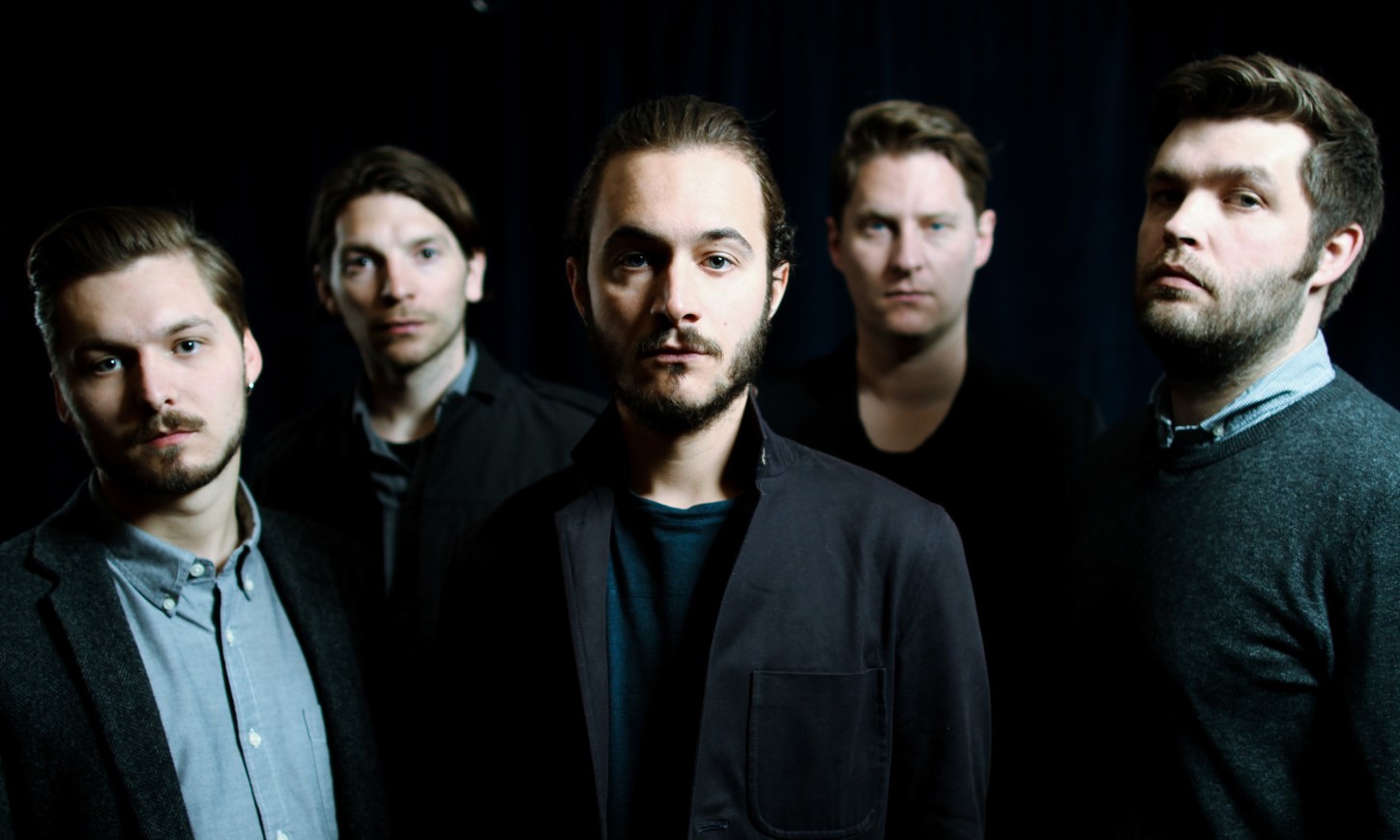
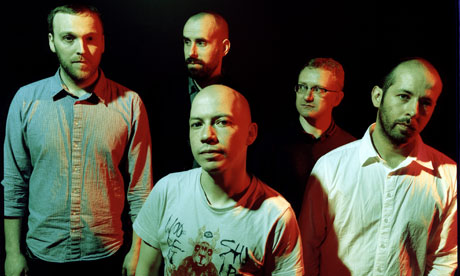
This is the case of this band from the small town of Kettering, 2 hours north of London. Jeff Barrett, the owner of Heavenly Records, discovered them just on time for their first appearances as a band and offered them to release their first single and album. Over a year and a half after that, Temples are releasing Sun Structures ([PIAS] 2014), an astonishing debut with strong support from the likes of Johnny Marr and Noel Gallaguer among others.
We get to talk about Sun Structures with bassist and co-founder Thomas E. Warmsley, while he’s promoting the album in London.
How are you guys?
Fine, we just got back from Spain yesterday, we’ve been in Barcelona yesterday, it was a good trip. We’re looking for to coming to Madrid also, we haven’t been there yet.
2 years since you gave us some really good singles, but it seems like you’ve been doing this forever. Was it just the right time to release the album?
We have done a lot the last year and a half. When we started as a band, at the end of summer of 2012, we wanted to create a collection of songs that people could listen to straight away. So we uploaded 4 songs on YouTube. While other bands might not have a recording at all to begin with, or perhaps maybe just one song, I think the four songs introduced people to us, and perhaps people feel more familiar with us. It really helps to inform everything we’ve done next, just having a strong idea of what we wanted to achieve with the record, and recording it in between touring. We had strong visions since the beginning of what we wanted to achieve.
You got a record deal and a single just before you had performed together.
Well, I think we had played a couple of shows. And I think just after 4 months that we had written some of the songs and put together the whole line up, Jeff Barret from Heavenly (Records) got in contact with us as he wanted to release our single. I think Heavenly is a record label that is one of the greatest independent labels here in UK. They’re very active. And the fact that we recorded it ourselves with all the strong ideas we had from the beginning… it was a real pleasure.
«We’re quite privilege that we were born in this decade and have such legacy of great music»
Sun Estructures is being made completely at home and with no other producers than yourselves. Was that a choice you made or is it just that you’re not comfortable with producers?
I guess bands are influenced by producers. We have a strong passion about the production of the record, and a lot of our favourite records are really led by that sound. People like Brian Eno, Jack Nitzsche have got a signature sound, and brought something unique to the songs that they worked on. For us the sound of the record was as important as the songs, and get through a label and recording it ourselves we thought that was an important element to retain and to keep on to, especially for this first record. And also it has to be the cheapest way, you know, not having to spend a fortune in a professional studio.
Did you expect such a good reviews?
Not at all, really. The very reason Temples exist is because we recorded 4 songs in Jamie’s studio, and just because we enjoyed how they sounded and what we’ve captured on those songs, and the fact that people react it’s something we really appreciate. We really just carried that through to the album. Just capturing what we’ve done. And it’s fantastic if people understand what we’re trying to achieve on the record.
Did you record the full album with analogue equipment?
When it comes to capturing sounds, although we’re using analogue effects, tape machines or old microphones, we embrace the digital side of technology, sound clean, sequencing… Embracing both is really important. Restricting yourself to try to create an exact replica of bands from different decades is probably quite defeatist in many ways. We like to embrace contemporary music as much as older influences.
How is the writing process? Do you all pretty much write the songs together?
Yeah I mean, all of this album has been writing in the studio, and whenever we had an idea we often recorded straight away. We kind of build the picture around an idea, and record it straight away. Is very studio based, and is quite impulsive in terms of, if a song is on the canvas is we’ll keep working on it until we’ve achieved an atmosphere around the song. And it seems to work for us!
If you have a look at your influences, it seems like were born in the wrong decade.
I don’t think that any decade has more influential than another. We have the privilege that all our favourite influences are from the last 50 years I suppose. We found 60’s pop songs was influential, 70’s experiments with sounds, the electronics of the 80’s, and the sampling of the 90’s. We’re quite privilege that we were born in this decade, and have such a legacy of great music.
«For us, the sound of the record was as important as the songs»
Should we redefined the meaning or the word “Psychedelia”?
It’s a word that appears an awful lot in these days, especially over the last year or so. For us in particular, I think something can’t be defined psychedelic in a material sense, I think is more a feeling of the music. No matter what style or influence, is how you react to it, and that experience and the feeling which is probably psychedelic rather than a particular sound or a particular image.
I think is left to everyone’s interpretation. I think as long as it’s left by that in the music, I don’t think people can go to far wrong.
It could be dangerous if it’s considered a temporary fashion.
Each decade embodies a psychedelic element. I think more often people are aware of that and it’s in everyone conscious of music perhaps. It’s about a perception, a psychedelic path. There are so many different styles of music, from dance to electronic, jazz to folk, it has the power of imagery, and I think as long as people realise that, then is a good thing, and it will reinvigorate interest in live music as well.
You have a bunch of shows coming, like Coachella or Primavera, but what are your plans for this year?
We are very excited to finally have a record out and we feel like perhaps the people would understand Temples slightly better now that they’re fully informed of every spectrum of our sound.
We’re very much looking forward to touring as much as possible and really bring the record to live live, and extending what people are experiencing on the record in a live environment and the whole process of that is what we are most exciting to do.
Are you happy?
Yeah! We’re very happy, very excited for the record and to get out there and play to as many people as possible. And I hope you’re happy too.
DB




























 R O C K A S T / /
«The world is our oyster» Interview with The Courteeners.
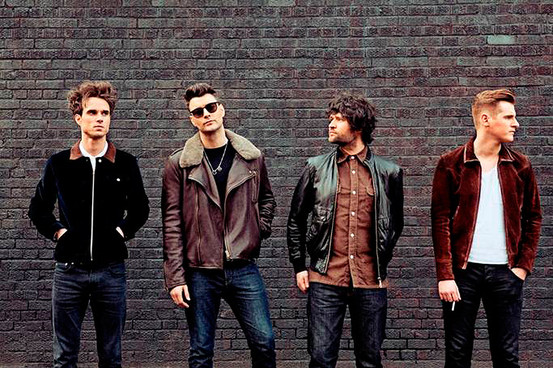
One of the most interesting Rock ‘n’ Roll acts in the UK over the last few years is visiting Madrid for the first time. That would be good enough, but the best thing is that they’re swapping huge arenas for a cozy venue of 300 people called Moby Dick, which by the way, is one of the coolest music venues of the spanish capital.
It’s made out of wood and the acoustic is as good as it can get. And that’s hard to find around here. These marvellous mancunians are presenting their third album called Anna, and they’re about to blow up the venue just with the soundcheck. We’re talking about The Courteeners.
We had a really great chat with Liam Fray (vocals / guitar) and Michael Campbell (drums / vocalist) in a coffee chain nearby and talk about music business, live shows, BBC Radio 1, managers, Pete Doherty or Morrissey.
Not many bands manage to get 3 out of 3 in the Top Ten albums in UK. Is it somehow scary? Do you feel some pressure whenever you’re about to release an album or you just got used?
LIAM FRAY: Honestly, the pressure should have been in the second album, but we didn’t really feel it. We’ve never really felt pressure writing our songs. We put extreme pressure on ourselves trying to be the best we can be. But the pressure from labels, management or whatever, it comes when you’ve done the record and there’s nothing you can do. It’s not by chance it’s about surviving. If you sell 5 copies you won’t survive. You just have to write the songs and hope the people will like it. I think the songs are open and honest.
MICHAEL CAMPBELL: I think about the achievements of what we’ve done with our 3 albums in the UK, with the relative kind of media support that we have. That achievement for us doesn’t bring any pressure or anything else, because we know what we have achieved.
You didn’t make a St. Jude 2nd part, with Falcon, and the same happens now with Anna. What do you have in mind for your next record?
LF: Maybe yeah! I think that’s one of the thing’s we’re most proud of. The albums sound very, very different. The common thread is honesty and without sounding self-involved or whatever, it’s quite unusual for a male singer-songwriter to be that open I reckon. I take big influence from Guy Gurvey from Elbow, to a certain degree Pete Doherty is quite an honest songwriter, you know, he has mellow moments. But you know, sometimes the songs can be quite mellow but then sometimes, we’ve got such a good understanding now together musically that we feel we should really, not necessarily experiment, but go in different directions. People that stick by bands rather than sticking by a hit song, they know that we are writing for songs. It’s just what song they take from here on it. The world is our oyster.
How was working with Joe Cross in this album? Is it that important the role of the producer?
LF: I think so. We get to work with Stephen Street and Ed Buller and they’re both incredible. The good thing about Joe was that he is our age, we were more relax around him, in the studio and outside the studio. We were going for meals, a couple of drinks, and he became a real friend. There’s a great understanding between producers and musicians, well, if you can call us musicians. Guys, guys in a band. (laughs).
You got to play with Morrissey and even Lou Reed in his very own club, how is it like to play with such a music icons?? How are them in the short distances?
LF: Just ask them. (laughs) At the time, it just felt like bizarre. They are, contrary to popular belief, quite normal. We’ve built up great expectations of what this band should be. We just tried to enjoy it.
Morrissey himself is incredible. Watching him play every night for like, 70 nights was just amazing.
Did he give you any advice?
LF: No, no he didn’t. We wouldn’t have taken it. He didn’t know anything. What does he know? (laughs). Don’t put that! That’s the kind of thing that they’re asking you for good reason. They wouldn’t ask you if they didn’t think you were good. And that’s good enough for us. If they think we’re great, or think we’re alright, that’s fantastic.
You have a very powerful show, Should a band put more attention to the live shows or is it more important record itself?
LF: If the album is good, it doesn’t really matter. If the album is strong enough the people will buy tickets for the show. If you have a reputation as a live band, let’s say, album 8th is not as good as the first seven, people still come to watch you, because you’re a great band.
How do you think has changed in the band since you’re started playing? What do you think you’ve gain with the time and, what have you lost if there’s anything you miss?
LF: Well we can nearly play our instruments… I don’t know really, probably not a lot. Not much. We are still the same guys, still do the same things, same jokes, still annoy each other just as much as we did 10 years ago. We are definitely a lot more open minded music playing, collectively, as a group. If one person’s got a vision and one person doesn’t want to go there, that can be quite an issue. But we had to come together collectively as a group. They put a lot of trust in me. If you bring something to the table and they’re not keen on it, then where do we go?
People have such short attention spans. You can’t put out the same album year after year after year. Some people do. I don’t want to play that. Bands make a record that sounds just like their last record. There are so many bands that do that, and it sells as well and people buy it. But why are they buying the same record?
How is the mainstream music media in the UK? Are they fair with all what they do?
LF: With twitter and online, there are so many different outlets now. It’s not as important as it was 10 years ago. It can be a great thing and it can really help bands. But we’ve never really taken much notice to one thing. The NME has been really good to us as a magazine. They’re great; they were there at the beginning. It’s great to have a magazine like that support you. But you don’t write songs for the magazines, you write them for yourselves and your fans.
Whose advice should a band listen to? The record label, producer, friends, critic, fans, or none of the above?
LF: I think the band and producer are the most important. The friends get to hear the songs first, but to be honest I wouldn’t take their advice. We’ve got a very tight group of friends. But I think we’ve got such a high threshold and quality control that a bad song wouldn’t get past the band and the producer. After that, it’s up to the public really. If it gets on the radio… it comes down to one person in the UK to get on Radio 1, and if he says no that means only a small section of people get to hear your music. It seems like a crazy system when you think about it but that’s the way it is.
What was the last thing you did as a band that you shouldn’t have done?
Probably starting a band! (laughs)
Are you happy?
LF: Yeah, I think so.
MC: We’re in Madrid for the first time and we’re very glad.
LF: I say as a group the happiest we’ve been since we started.
DB
Comparte esto:
Deja un comentario
Publicado en british rock, indie, pop, rock
Etiquetado Liam Fray The Courteeners, The Courteeners Anna 2013 Madrid, THe Courteeners best interview, THe Courteeners best quotes, The Courteeners comments, The Courteeners concerts, The Courteeners España, The Courteeners interview 2013, The Courteeners new album, The Courteeners we're the best band